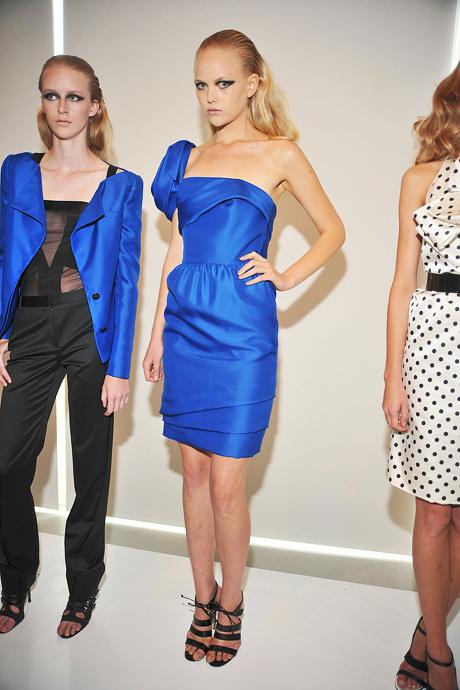
Advertisement - Continue Reading Below1) BCBG Max Azria one-shoulder blue floral print and solid black bandage minidress. Perfect for a surfer girl's night on the town!
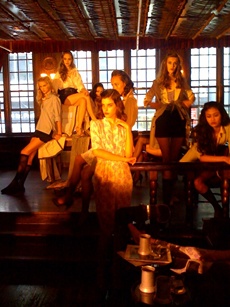
2) Fashionistas storm the famed and usually testosterone-filled Keen's Steakhouse (est. 1885) for Organic by John Patrick
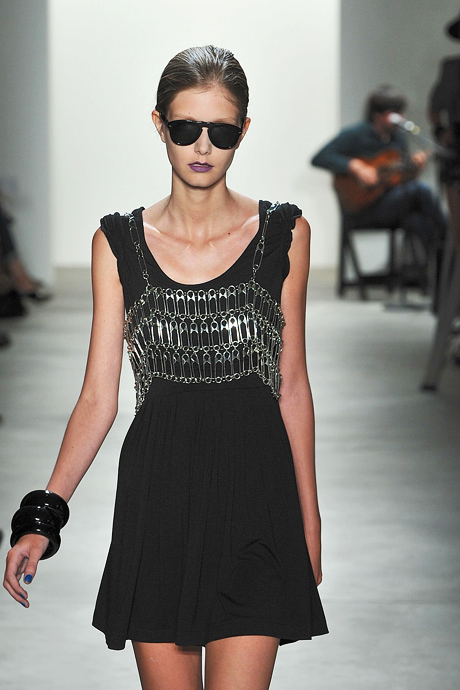
3) Blue manicures and safety pin chic at Vena Cava; especially loved look #2, a black babydoll dress with metal safety pin camisole
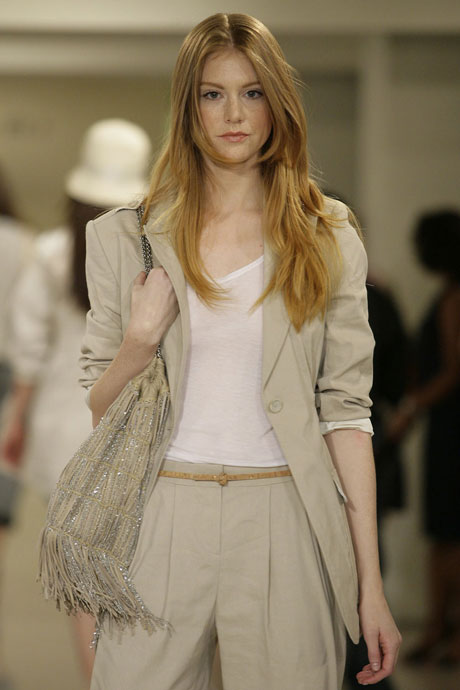
4) Great chain and fringe shoulder bag at Elie Tahari
5) Prabal Gurung's Yves Klein blue cocktail dress should be on everyone's list to replace their LBD!
—Joann Pailey
2015年12月4日星期五
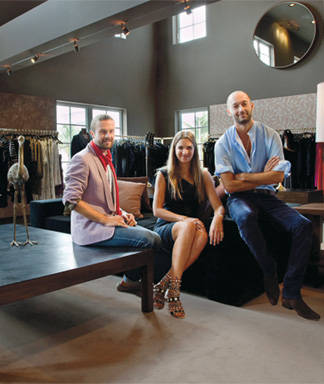
Jimmy Cohrssen PhotographyAdvertisement - Continue Reading BelowIn Paris they go to Colette, in Milan to 10 Corso Como, in L.A. it's Fred Segal, and when they're in Miami, I hope they'll come to us," says Milan Vukmirovic, co-owner of the Webster, a new three-story boutique in South Beach. To merely hope for a place on the jet-setter's shopping rotation is humble. After all, Vukmirovic cofounded its crown jewel, Colette, and his partners, Frederic Dechnik and Laure Heriard Dubreuil, have worked collectively at Hermès, Balenciaga, YSL, and Gucci. From this impeccable pedigree comes a retail experience that will restore your faith in the glamorous old-
fashioned way of shopping.
More From
ELLEAnd although the 1930s art deco structure does include an outpost of the Paris restaurant Caviar Kaspia on the ground floor, the Webster is not a relic of our excessive past but instead a new kind of designer boutique. It's a modern-day tribute to the storied elegance and ceremony of the great American department stores of the '40s, with furniture by BDDW, gold clothing racks with chocolate marble bases, and a bow-tie-wearing, white-gloved staff flown in from Italy and Paris. "I have walked into expensive stores and felt uncomfortable," Heriard Dubreuil says. "We've made sure our staff is gracious and kind." If the experience doesn't grab you, the clothes certainly will. "We don't think about what will sell or what editors might like; we choose only things we love. In that way we are unique," Heriard Dubreuil says. "We suggest that our customers buy one or two quality pieces a season." With the store's deftly edited selection—including exclusive Balenciaga dresses, a one-of-a-kind blue sequin Balmain cocktail number, and Marc Jacobs bags designed especially for the store—it's the place to find something special, and it's already drawing heavy-hitter stylists such as Rachel Zoe.
To celebrate, amid the swaying palms that line Collins Avenue, Miami's rarely-seen-in-South-Beach society of artists (Aaron Young), old families (host Christina Getty), and friends who've converged from Europe (the guest of honor is jewelry designer Solange Azagury-Partridge) gather for the Webster's grand opening. "This is so good for Miami!" says Craig Robins, founder of Design Miami. "The city has gone in fashionable cycles," says Vukmirovic amid the sun-kissed, champagne-guzzling revelers, "from the Versace and Calvin Klein decade to a new era with Art Basel. We are embracing this new artistic energy, and we hope to be at the center of it." And it would seem that they are, as all of Miami bobs in a sea of glittery Marc Jacobs pencil skirts and lamé tunics, black-and-white Alaïa cocktail dresses, towering Balenciaga heels, and glass cases filled with vintage Rolexes and House of Waris cocktail rings. "We want it to be a fashion temple," whispers Dechnik, looking on the crowd with a smile. Now that's a place of worship.
Courtesy of InvisionPhoto: Courtesy John Shearer for Invision
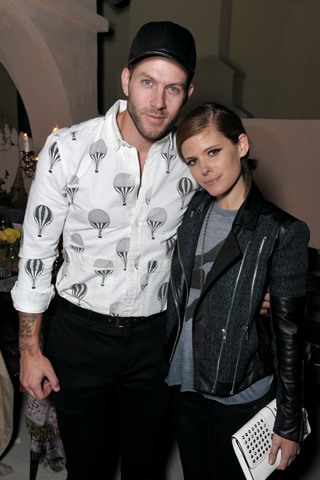
Advertisement - Continue Reading BelowLast night, at the launch of SpinMedia's Supper Club, we had the pleasure of dining with Kate Mara. Sitting next to the House of Cards star—who came straight from filming a Broken Bells music video—we picked up on a few things. First: She's a vegan, has over 40 cousins, and is on Twitter (but not Facebook). She loves Lorde and Miley, equally. And she loves her stylist, Johnny Wujek.
More From
ELLEWujek—who styles Katy Perry and Amber Heard, in addition to Mara—hosted the inaugural dinner at his home in Beverly Hills. Guests enjoyed cocktails and conversed on everything from the Carrie marketing to Courtney Stodden and why House of Versace is "so bad, it's good." Wujek also announced his upcoming SpinMedia series, "Stylist on Set," where he'll make non-Hollywood starlets' dreams come true by answering their Facebook and Twitter fashion prayers for a personal styling session.
We stole a moment with Mara and Wujek to chat boys, getting naked, and how their style romance really works. Spoiler alert: The duo finish each other's sentences.
How did you two meet?Kate Mara: It was a Flaunt magazine editorial shoot. It was one my first photo shoots. I thought [Johnny] was really cute. And so, I was super shy about getting naked in front of him. I didn't want to show him my goods...because I thought he might be straight.Johnny Wujek: She was changing behind the curtain [and] wouldn't let me in. And I was like "Alright." And then, I think a 'N Sync song came on. I went into a full hip-hop routine, and she was like, "Oh, he's gay." And then [her] titties [came] out. And then we became friends. That was seven years ago.
Do you have to get naked a lot for work?KM: Well, yeah, have you seen the show [House Of Cards]? But yes, [Johnny] has seen me naked.JW: She looks good naked.
What does your relationship look like now?KM: We bond over clothes, music, movies, and boys.JW: When we are single, we talk about boys we want to hook up with. When we are with boys, we talk about how amazing they are and our love [for them]. It's really just developed into an amazing friendship, and we get to play dress up together.
KM: It's like playing with Barbies when you are little. I'm his Barbie.
Can you tell us about your Emmys dress?JW: I was in New York for fashion week. She told me, "I'm going to the Emmys." I went to the J. Mendel show and I saw the f---ing dress. I know that she loves white. When I showed her, she said, "That's the dream dress I've been waiting for." They sent it the next day, we tried it on in New York, and it was done.Where do you want to take Kate's style next?JW: Eventually, we'll do a wedding dress. Down the road. One day.KM: Maybe.
If you could put her in any designer, it would be...?JW: Kate is super chic and classic. I've brought her designers like Mary Katrantzou—she's amazing, very digital print-y, and forward thinking for fashion—but it's not [Kate's] thing. And I get it. Kate's classic and clean.Kate, who are you wearing tonight?JW: Her jacket is Helmut Lang and her T-shirt is Kelly Wearstler.KM: [My clutch] is Rebecca Minkoff. Isn't it cute? I love it. Her stuff is really good right now. [My shoes] are Prada, and [my pants are] Genetic Denim. My sister introduced me to Genetic Denim, and I'm obsessed. Tell them that my sister, Rooney, and I love their stuff.
During dinner you mentioned your love for Miley. What are your thoughts on the lingering controversy?KM: I love her. I don't need to defend her. I love her album. I've loved her music since she was, whatever, Hannah Montana.JW: Everyone thinks she's being so rebellious, defiant, sexual, and whatever.
KM: But, the girl can sing. If she couldn't sing, maybe I wouldn't love her as much. But, her voice is amazing. Oh my God, they are playing Miley ["We Can't Stop"] now. It's like the gods were listening us.
2015年12月3日星期四
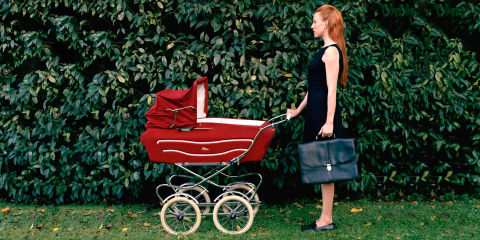
GettyA woman only needs to announce her pregnancy and the inquiries begin: What are you going to do after the baby? Will you work or stay home? For so long the implication behind that question, when directed toward a woman for whom staying home is even a fiscally possible option, has been this: Are you going to choose you or your kids?
Old fashioned as it may sound, the belief that stay-at-home moms are better for their kids is one onto which many Americans cling. Recent research from PEW tells us that a third of us think that mothers who don't work are best for their children, while just 16 percent say a mother who works full time is ideal.
Advertisement - Continue Reading BelowStudies on the Working Mom long assumed that she is bad for her kids—all that remained was figuring out just how bad. Now some social scientists are flipping these assumptions on their head, looking instead at the way working moms might actually benefit their kids. And their findings are something to celebrate.
Leading a study for Harvard Business School's new Gender Initiative, professor Dr. Kathleen McGinn found that girls with working mothers have more fruitful careers; they also earn more and climb higher than their peers who had stay-at-home mothers. This means that if you want your daughter to be a #bossbabe, the best thing you can do for her is get to work.
More From
ELLE
Tell us a little bit about the study.
We used data collected by the International Social Survey Programme (ISSP) across 24 countries in Latin America, Europe, North America, and Asia to study the influence of maternal employment on adult children's work and home outcomes. Looking at survey data from over 20,000 women, we found that being raised by a mother who worked outside the home is associated with positive outcomes for women at work and at home. Daughters of mothers who worked outside the home for pay at any point before the daughter was 14 years old are on average more likely to be employed, hold supervisory responsibility at work, earn higher income, and spend fewer hours engaged in household work each week than daughters of mothers who never worked outside the home for pay when the daughter was under 14 years old. That said, mothers' employment does not significantly affect the number of hours adult women spend weekly caring for family members.
What is the impact on boys?
For men, being raised by a working mother doesn't influence outcomes at work, but is significantly related to time spent caring for family members. Compared to sons of mothers who never worked outside the home when the son was under 14 years old, sons of mothers who worked outside the home spend more hours caring for family members each week, on average.
Did these findings surprise you?
It's straightforward that daughters of working moms are more likely to work themselves. But the increase in likelihood of supervisory responsibility for daughters who chose to work surprised us. This suggests that working moms are signaling more than "it's normal for women to work outside the home"; they're also signaling that it's normal for women to be powerful, to be in charge. This hasn't been explored before, as far as I know.
Any sense of why this is the case? Is it the role model effect, or something more?
We've run a series of analyses to pinpoint why we see this pattern of results–positive career outcomes for women and positive outcomes at home for men. It's a role model effect along two dimensions: Working moms affect their children's gender attitudes, their beliefs about behaviors that are "right" and "normal" for women. We see evidence of this in measures of gender attitudes, too.
"Adult children of working moms have much more egalitarian gender attitudes."
than adult children of moms who stayed home full time. Working moms also model a set of skills, ways of managing an active life at home and at work. We're currently investigating the relationship between working moms and their children's work/home coping skills as adults.
And these findings aren't just limited to Western countries and the well-off, right?
The men and women we studied come from 24 countries around the world. In each country, the surveys were completed by a representative sample of the population in that country. Very few of the respondents are "well off" in the sense of having incomes more than one standard deviation above average income within the country; similarly, very few have incomes more than one standard deviation below average income within the country.
I can imagine some more traditional types raising an eyebrow over the absence of insight into the emotional well-being of the daughters of working mothers. As recent Pew studies show us, many still hold onto this idea that mothers who don't work are best.How would you respond to those that might say, Sure, these women are doing better at work, but are they are living happy, stable lives?
I find it interesting that these perceptions persist. Over the last 20 years there have been many studies exploring the effects of working moms on their children's well being. The consistent takeaway across these studies is that children of working moms, when they're children, are higher achieving and have fewer behavioral problems than children whose moms are not employed. These effects are strongest for children from low income families. While the findings from past work suggest daughters of working moms are more likely to lead happy, stable lives as adults, they don't look at happiness directly, and they don't study the children as adults. In our own study, we can look at self-reported happiness of adult children of working moms, relative to adult children of moms who didn't work outside the home. We find that being raised by a mom who works outside the home has no effects on adult daughters' or sons' self-reported happiness. Controlling for education, employment, income, and other demographic variables, children of working moms and children of stay-at-home moms report equal levels of happiness as adults—not happier, not less happy.
There seems to have been a shift among social scientists in how they approach working moms. For so long it seemed like the goal was to discover how bad they are for children, now we are starting to hear how good it is for them. In short, we, the Working Moms, are no longer assumed to be a problem. What's going on?
Across most of the countries we studied between 2002 and 2012, gender attitudes are becoming more egalitarian over time. As people come to see working women as "normal," working women face fewer barriers at work and in society. So, working moms today have a different experience than working moms 25 years ago; as a result, their children are likely to experience their moms differently too. Another thing that's changed, though not evenly across countries, and not sufficiently for all income levels, is the quality of childcare available for families in which both parents, or a single parent, work.
Do you have children? Did these findings offer you any personal relief?
I have one daughter. She's 23, and she's a rock star. We're our own, mini, mutual admiration society.
What do you hope women will take away from this?
Whether you stay at home full time or work outside the home part time or full time, parents do their children a favor by helping them see women and men as equals. Giving your children opportunities to see and know people—men and women—who make lots of different choices at work and at home will help your children see lots of options possible in their own lives.
2015年12月2日星期三
Photo: Getty ImagesAdvertisement - Continue Reading BelowPhoto: Getty Images
The part of me that grew up South Asian in the States is secretly thrilled to see an Indian Miss America. I'm thinking of myself as a second grader in Missouri, drawing my face with a peach-colored crayon, until I realized there was a shade called Tawny (the most common mispronunciation of my name). For that kid, and so many others, Nina Davuluri's win is momentous example of #desipride.
More From
ELLEBut it's only just now that I'm making this admission. I say I'm "secretly thrilled" because I'm tired of the brouhaha surrounding something as inane as a beauty pageant. And I'm tired of the knee-jerk racist response that followed the announcement that Davuluri had been crowned the winner.
This is a historic moment, as when any group "makes it"—Davuluri is the first Indian-American to win the pageant, and one of three Asian-Americans in the top five, including Rebecca Yeh (Miss Minnesota) and Crystal Lee (Miss California). Davuluri's win struck a chord with the masses of Americans who still believe Barack Obama is Muslim, The Hunger Games' Rue can't be black, and the cute kid from the Cheerios ad is Satan's spawn. Angry tweets flooded the Twitterverse: "I don't understand how you can be up for Miss America you're not American you're a f*cking dot head!! #MERICA"
Yes, the Miss America pageant is a quintessential all-American display, as is, sadly enough, the barrage of xenophobic tweets. We're a land built on difference and the fear of it. For me, the thrill of Davuluri's win fades when you consider what it takes to be a real-life Barbie doll. Davuluri's trainer told The New York Post that the pageant winner dropped over 50 pounds before stepping onto that stage to perform a Bollywood number.
Then there was that minor tabloid scandal in which Davuluri allegedly called former Miss America Mallory Hagan "fat as sh*%" while celebrating her win with friends in a hotel room. Davuluri has since denied making the nasty comments. All too familiar is that the competition to be prettiest, skinniest and smartest (in that order) revolves around women undermining one another's basic value.
While the self-proclaimed "Miss Diversity" has been cleared of the charges, it will be interesting to see where winning Miss America takes Davuluri. So far, she's appeared on Kelly & Michael with Mindy Kaling, another Indian-American woman who has received backlash for not having men of color love interests on her show. It's fitting that these two ladies should appear on television, side by side, breaking barriers, achieving firsts, and being criticized for not representing.
It's this need to have celebrities and Miss Americas represent us, which is so potent and dangerous. Nina Davuluri's win is a crowning achievement in a very narrow sense of the term. She's essentially fitting into a ready-made cutout of hegemonic beauty ideals—both in the U.S. and even in India, where Fair & Lovely creams, bleaching treatments, and blue contacts are standard practice in pageants. A woman of Davuluri's complexion would have a long shot at best at winning Miss India, a sad truth of the toxicity of Western beauty standards' global impact. When recognized in this context, that a figure like Davuluri would once be considered "too Indian" to win in the U.S., and is too brown to win in India today, that is when I am thrilled again that she's won.
2015年12月1日星期二
Getty ImagesAdvertisement - Continue Reading BelowPhoto: Getty Images
BFF pop duo Caroline Hjelt and Aino Jawo just released a new song off their much-anticipated album This Is...Icona Pop, which comes out on September 24 but can be pre-ordered on iTunes. We've already listened to the new end-of-summer jam multiple times today, and we can surely see it being a top hit during the NYFW after-parties this season. Stream it here now:
2015年11月30日星期一
Courtesy of MikohWorking women get all sorts of advice. Lean in, lean out, ask for a raise, but don't ask in the wrong way, be aggressive, but not too aggressive. We're also told to make sure not to forget about our personal lives, lest we end up foregoing families or love or travel or friendship in service of our careers. It's confusing and maddening, and we're all still struggling to figure it out. "This Woman's Work" is an ongoing series meant to show how women in different industries are living their lives. We hope to show that there's no one "right" way to succeed. There are so many ways, and so many different experiences. Today we're talking to sisters Oleema and Kalani Miller, co-founders of Mikoh, the super sexy, fashion-forward swimsuit line.
Advertisement - Continue Reading Below
Describe a typical workday.
Oleema: Well, that's the best part [of the job]. No one day is ever the same as the next. I'm pretty much traveling year round. I'm more of a morning person than a night owl. At the old age of 26, I go to bed at 10 P.M. I'm not a big party girl. I like to wake up early and if I'm at home, I'll take my dog for a walk and get a coffee. I try to get outside in the morning. I think that's a good way to start your day—to do something active in the sunshine. From there, I try to go on my computer and get as much work done as possible.
More from A Day in The Life12 articles
ELLE + Maybelline
How to Create a Dream Job Baking Glitter Cakes...
Can Children's Toys Close the Gender Gap in...
Meet the Woman With the Secret to the Perfect...
Passion, Persistence, and Resolve: Carrie...
Kalani: Even though I'm on the business side of things, Oleema and I lead a very similar lifestyle. I wake up and drink a cup of hot green tea or hot water with lemon. I love to go outside—every single morning I go out on the beach, and I jump in the ocean or the pool, and then I get on my computer. I think I spend more time on my computer than Oleema. Oleema spends more time finding inspiration and sketching. But we're both very active. O: We definitely are doing things the unconventional way, which keeps it fun and keeps it true to who we are.
What were you doing before you came up with the idea for Mikoh?
O: We grew up in Orange County with the ocean as our backyard. We lived the quintessential Southern California lifestyle, so from day one we were always in bikinis, going to the beach every single day with our family. We started traveling from a really young age. After high school I knew I was definitely not going to take the conventional route of going to college. It was kind of a natural progression for me to go from wearing bikinis every day to creating them.
Was there one moment where you said to each other, "This is it! Let's make this a company?"
O: [The idea] came to life when I was traveling through Europe and Kalani was studying business at the University of California, Santa Barbara. With a deep love for travel and having grown up at the beach, I had a moment of realization that there might be a way to translate the lifestyle I loved (and was leading) into a profitable business. Since I was so passionate about this lifestyle, I thought others might be too. I remember calling Kalani at home, presenting the idea to her, and hearing her say, "When can we start?" K: We were fortunate enough to have a supportive family that has helped us every step of the way. We raised the money internally to start the company, and although they always say not to mix business and family, we found that we couldn't have achieved our success without their love and support.
How did you learn how to design?
O: Both of my parents are designers in their own right. My father is a landscape architect and my mother went to school for interior design. When I was young, I started to sew for fun, and have been playing with fabrics and materials for as long as I can remember. My learning to design couldn't be less formal, actually. I've never taken a course or a class; I taught myself. I loved the challenge of figuring out the best way to bring my design ideas to life. Throughout the years, I developed a strong working relationship with our manufacturer and we work hand in hand.
Was there ever a time you felt you were treated differently than your male counterparts or colleagues? Maybe when raising money for the brand?
K: It's more that we're young and Asian [than female]. We look like we're 12 years old. People are more surprised that it's two young, successful women that started the brand. O: Yeah. At first glance, they probably underestimate us because we're, like, 5'2'', tiny, Asian, literally can be mistaken for being underage when we fly. People think we'll be very well-versed in fashion or aesthetics, but I think once they're able to see us from a business perspective, they're more taken aback. But it's better that way. The element of surprise is always good.
What do you do to stay healthy?
O: What's most important to us is being outside. Even right now, it's kind of gray and overcast in California, but we're still outside doing things. Our mom always said, "Just get outside and get some sun." And it couldn't be more true. Even if you're in New York and it's snowing, it's important to get fresh air. I love doing Pilates. If I'm traveling in Hawaii I try to surf or go on walks on the beach. Being mindful of the different elements around you and choosing the better option whenever you can is very important. K: For me it's being mindful and aware of what you're eating, but it's also about having fun. If you want to have that piece of cake, eat that piece of cake! O: It has to be a combination of things that leads to a healthy lifestyle. You can't just do one thing and then go out and get drunk every single night. It's has to be combination of everything. K: I also don't ever leave the house without putting sunscreen on my face, even if it's cloudy. I really don't want to get wrinkles. I think the best think you can do for your skin is to drink a lot of water. O: I always put sunscreen on. One our friends started a sunscreen company called Shade Sunscreen that's really good. We like it because it has more of a matte finish and doesn't leave that oily, thick residue. Also, pretty much rain or shine, I wear Bobbi Brown BB Cream, which I love.
What advice would you give someone who wanted to have your job someday?
O: Be humble—I definitely don't know everything! Every moment I'm learning something new. Be humble and truthful and when you need help, ask for it. Always be gracious and grateful to whoever is helping you. K: Mine is pretty simple: Just do what you love. Oleema's FIT is Maybelline Fit Me Matte + Poreless Foundation in 230 Natural Buff. Kalani's FIT is Maybelline Fit Me Matte + Poreless Foundation in 235 Pure Beige.
 Advertisement - Continue Reading Below1) BCBG Max Azria one-shoulder blue floral print and solid black bandage minidress. Perfect for a surfer girl's night on the town!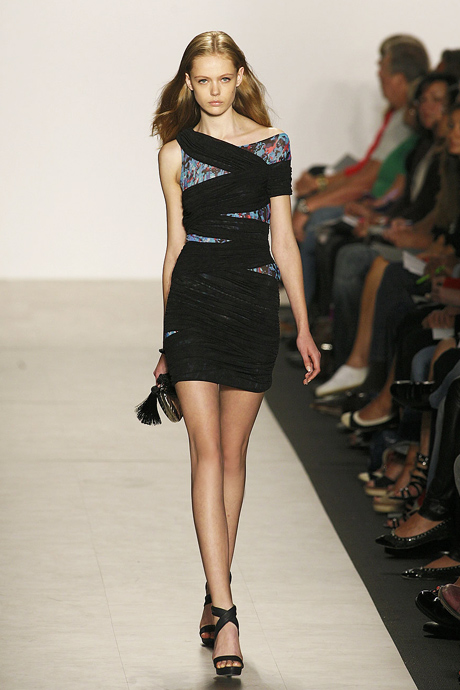

 Jimmy Cohrssen PhotographyAdvertisement - Continue Reading BelowIn Paris they go to Colette, in Milan to 10 Corso Como, in L.A. it's Fred Segal, and when they're in Miami, I hope they'll come to us," says Milan Vukmirovic, co-owner of the Webster, a new three-story boutique in South Beach. To merely hope for a place on the jet-setter's shopping rotation is humble. After all, Vukmirovic cofounded its crown jewel, Colette, and his partners, Frederic Dechnik and Laure Heriard Dubreuil, have worked collectively at Hermès, Balenciaga, YSL, and Gucci. From this impeccable pedigree comes a retail experience that will restore your faith in the glamorous old-
 Courtesy of InvisionPhoto: Courtesy John Shearer for Invision
 GettyA woman only needs to announce her pregnancy and the inquiries begin: What are you going to do after the baby? Will you work or stay home? For so long the implication behind that question, when directed toward a woman for whom staying home is even a fiscally possible option, has been this: Are you going to choose you or your kids?
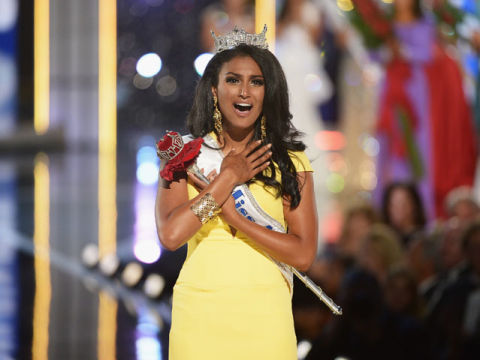 Photo: Getty ImagesAdvertisement - Continue Reading BelowPhoto: Getty Images
 Getty ImagesAdvertisement - Continue Reading BelowPhoto: Getty Images
 Courtesy of MikohWorking women get all sorts of advice. Lean in, lean out, ask for a raise, but don't ask in the wrong way, be aggressive, but not too aggressive. We're also told to make sure not to forget about our personal lives, lest we end up foregoing families or love or travel or friendship in service of our careers. It's confusing and maddening, and we're all still struggling to figure it out.
 ELLE + Maybelline
 How to Create a Dream Job Baking Glitter Cakes...
 Can Children's Toys Close the Gender Gap in...
 Meet the Woman With the Secret to the Perfect...
 Passion, Persistence, and Resolve: Carrie...
Kalani: Even though I'm on the business side of things, Oleema and I lead a very similar lifestyle. I wake up and drink a cup of hot green tea or hot water with lemon. I love to go outside—every single morning I go out on the beach, and I jump in the ocean or the pool, and then I get on my computer. I think I spend more time on my computer than Oleema. Oleema spends more time finding inspiration and sketching. But we're both very active.
Passion, Persistence, and Resolve: Carrie...
Kalani: Even though I'm on the business side of things, Oleema and I lead a very similar lifestyle. I wake up and drink a cup of hot green tea or hot water with lemon. I love to go outside—every single morning I go out on the beach, and I jump in the ocean or the pool, and then I get on my computer. I think I spend more time on my computer than Oleema. Oleema spends more time finding inspiration and sketching. But we're both very active.