2015年12月7日星期一

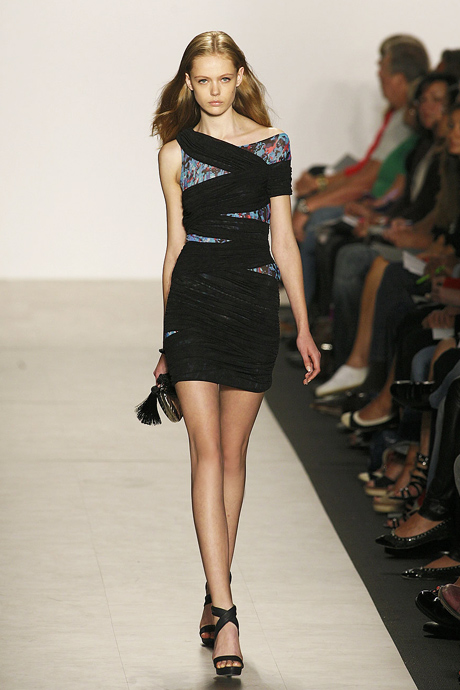
Advertisement - Continue Reading Below1) BCBG Max Azria one-shoulder blue floral print and solid black bandage minidress. Perfect for a surfer girl's night on the town!
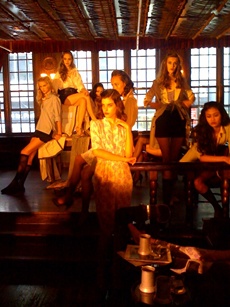
2) Fashionistas storm the famed and usually testosterone-filled Keen's Steakhouse (est. 1885) for Organic by John Patrick


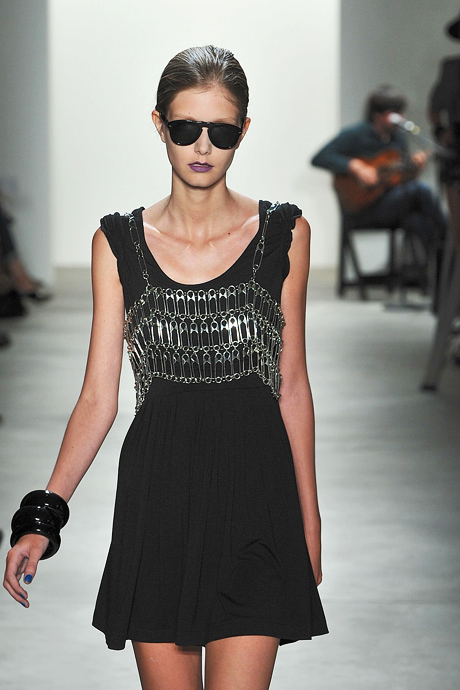
3) Blue manicures and safety pin chic at Vena Cava; especially loved look #2, a black babydoll dress with metal safety pin camisole


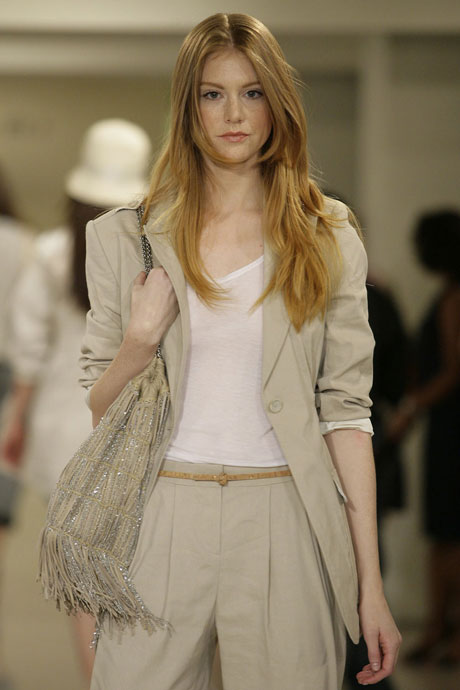
4) Great chain and fringe shoulder bag at Elie Tahari


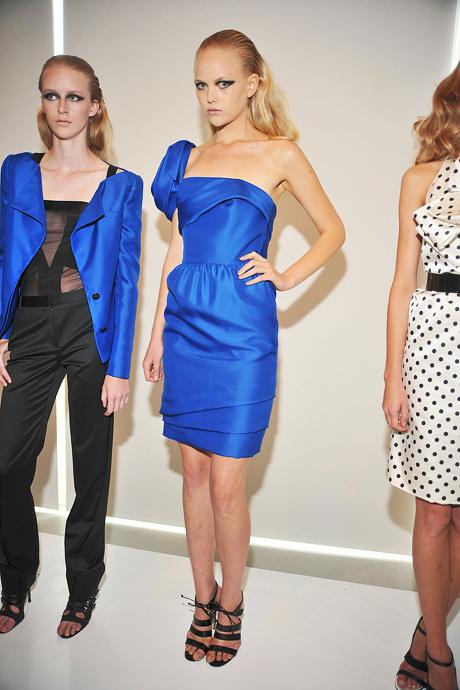
5) Prabal Gurung's Yves Klein blue cocktail dress should be on everyone's list to replace their LBD!


—Joann Pailey

2015年12月4日星期五

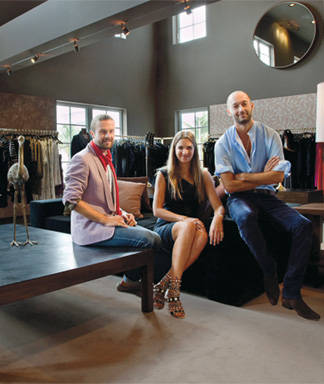
Jimmy Cohrssen PhotographyAdvertisement - Continue Reading BelowIn Paris they go to Colette, in Milan to 10 Corso Como, in L.A. it's Fred Segal, and when they're in Miami, I hope they'll come to us," says Milan Vukmirovic, co-owner of the Webster, a new three-story boutique in South Beach. To merely hope for a place on the jet-setter's shopping rotation is humble. After all, Vukmirovic cofounded its crown jewel, Colette, and his partners, Frederic Dechnik and Laure Heriard Dubreuil, have worked collectively at Hermès, Balenciaga, YSL, and Gucci. From this impeccable pedigree comes a retail experience that will restore your faith in the glamorous old-
fashioned way of shopping.
More From ELLEAnd although the 1930s art deco structure does include an outpost of the Paris restaurant Caviar Kaspia on the ground floor, the Webster is not a relic of our excessive past but instead a new kind of designer boutique. It's a modern-day tribute to the storied elegance and ceremony of the great American department stores of the '40s, with furniture by BDDW, gold clothing racks with chocolate marble bases, and a bow-tie-wearing, white-gloved staff flown in from Italy and Paris. "I have walked into expensive stores and felt uncomfortable," Heriard Dubreuil says. "We've made sure our staff is gracious and kind." If the experience doesn't grab you, the clothes certainly will. "We don't think about what will sell or what editors might like; we choose only things we love. In that way we are unique," Heriard Dubreuil says. "We suggest that our customers buy one or two quality pieces a season." With the store's deftly edited selection—including exclusive Balenciaga dresses, a one-of-a-kind blue sequin Balmain cocktail number, and Marc Jacobs bags designed especially for the store—it's the place to find something special, and it's already drawing heavy-hitter stylists such as Rachel Zoe.
To celebrate, amid the swaying palms that line Collins Avenue, Miami's rarely-seen-in-South-Beach society of artists (Aaron Young), old families (host Christina Getty), and friends who've converged from Europe (the guest of honor is jewelry designer Solange Azagury-Partridge) gather for the Webster's grand opening. "This is so good for Miami!" says Craig Robins, founder of Design Miami. "The city has gone in fashionable cycles," says Vukmirovic amid the sun-kissed, champagne-guzzling revelers, "from the Versace and Calvin Klein decade to a new era with Art Basel. We are embracing this new artistic energy, and we hope to be at the center of it." And it would seem that they are, as all of Miami bobs in a sea of glittery Marc Jacobs pencil skirts and lamé tunics, black-and-white Alaïa cocktail dresses, towering Balenciaga heels, and glass cases filled with vintage Rolexes and House of Waris cocktail rings. "We want it to be a fashion temple," whispers Dechnik, looking on the crowd with a smile. Now that's a place of worship.

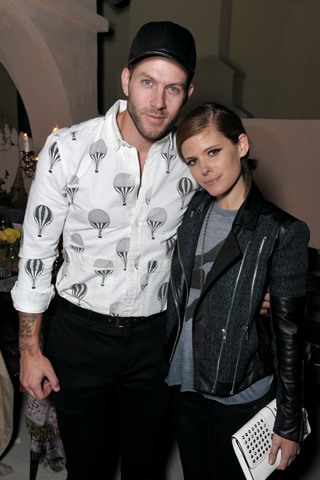
kate mara and johnny wujek Courtesy of InvisionPhoto: Courtesy John Shearer for Invision

Advertisement - Continue Reading BelowLast night, at the launch of SpinMedia's Supper Club, we had the pleasure of dining with Kate Mara. Sitting next to the House of Cards star—who came straight from filming a Broken Bells music video—we picked up on a few things. First: She's a vegan, has over 40 cousins, and is on Twitter (but not Facebook). She loves Lorde and Miley, equally. And she loves her stylist, Johnny Wujek.
More From ELLEWujek—who styles Katy Perry and Amber Heard, in addition to Mara—hosted the inaugural dinner at his home in Beverly Hills. Guests enjoyed cocktails and conversed on everything from the Carrie marketing to Courtney Stodden and why House of Versace is "so bad, it's good." Wujek also announced his upcoming SpinMedia series, "Stylist on Set," where he'll make non-Hollywood starlets' dreams come true by answering their Facebook and Twitter fashion prayers for a personal styling session.
We stole a moment with Mara and Wujek to chat boys, getting naked, and how their style romance really works. Spoiler alert: The duo finish each other's sentences.
How did you two meet?Kate Mara: It was a Flaunt magazine editorial shoot. It was one my first photo shoots. I thought [Johnny] was really cute. And so, I was super shy about getting naked in front of him. I didn't want to show him my goods...because I thought he might be straight.Johnny Wujek: She was changing behind the curtain [and] wouldn't let me in. And I was like "Alright." And then, I think a 'N Sync song came on. I went into a full hip-hop routine, and she was like, "Oh, he's gay." And then [her] titties [came] out. And then we became friends. That was seven years ago.
Do you have to get naked a lot for work?KM: Well, yeah, have you seen the show [House Of Cards]? But yes, [Johnny] has seen me naked.JW: She looks good naked.
What does your relationship look like now?KM: We bond over clothes, music, movies, and boys.JW: When we are single, we talk about boys we want to hook up with. When we are with boys, we talk about how amazing they are and our love [for them]. It's really just developed into an amazing friendship, and we get to play dress up together.
KM: It's like playing with Barbies when you are little. I'm his Barbie.
Can you tell us about your Emmys dress?JW: I was in New York for fashion week. She told me, "I'm going to the Emmys." I went to the J. Mendel show and I saw the f---ing dress. I know that she loves white. When I showed her, she said, "That's the dream dress I've been waiting for." They sent it the next day, we tried it on in New York, and it was done.Where do you want to take Kate's style next?JW: Eventually, we'll do a wedding dress. Down the road. One day.KM: Maybe.
If you could put her in any designer, it would be...?JW: Kate is super chic and classic. I've brought her designers like Mary Katrantzou—she's amazing, very digital print-y, and forward thinking for fashion—but it's not [Kate's] thing. And I get it. Kate's classic and clean.Kate, who are you wearing tonight?JW: Her jacket is Helmut Lang and her T-shirt is Kelly Wearstler.KM: [My clutch] is Rebecca Minkoff. Isn't it cute? I love it. Her stuff is really good right now. [My shoes] are Prada, and [my pants are] Genetic Denim. My sister introduced me to Genetic Denim, and I'm obsessed. Tell them that my sister, Rooney, and I love their stuff.
During dinner you mentioned your love for Miley. What are your thoughts on the lingering controversy?KM: I love her. I don't need to defend her. I love her album. I've loved her music since she was, whatever, Hannah Montana.JW: Everyone thinks she's being so rebellious, defiant, sexual, and whatever.
KM: But, the girl can sing. If she couldn't sing, maybe I wouldn't love her as much. But, her voice is amazing. Oh my God, they are playing Miley ["We Can't Stop"] now. It's like the gods were listening us.

2015年12月3日星期四

GettyA woman only needs to announce her pregnancy and the inquiries begin: What are you going to do after the baby? Will you work or stay home? For so long the implication behind that question, when directed toward a woman for whom staying home is even a fiscally possible option, has been this: Are you going to choose you or your kids?
Old fashioned as it may sound, the belief that stay-at-home moms are better for their kids is one onto which many Americans cling. Recent research from PEW tells us that a third of us think that mothers who don't work are best for their children, while just 16 percent say a mother who works full time is ideal.
Advertisement - Continue Reading BelowStudies on the Working Mom long assumed that she is bad for her kids—all that remained was figuring out just how bad. Now some social scientists are flipping these assumptions on their head, looking instead at the way working moms might actually benefit their kids. And their findings are something to celebrate.
Leading a study for Harvard Business School's new Gender Initiative, professor Dr. Kathleen McGinn found that girls with working mothers have more fruitful careers; they also earn more and climb higher than their peers who had stay-at-home mothers. This means that if you want your daughter to be a #bossbabe, the best thing you can do for her is get to work.
More From ELLE

Tell us a little bit about the study.

We used data collected by the International Social Survey Programme (ISSP) across 24 countries in Latin America, Europe, North America, and Asia to study the influence of maternal employment on adult children's work and home outcomes. Looking at survey data from over 20,000 women, we found that being raised by a mother who worked outside the home is associated with positive outcomes for women at work and at home. Daughters of mothers who worked outside the home for pay at any point before the daughter was 14 years old are on average more likely to be employed, hold supervisory responsibility at work, earn higher income, and spend fewer hours engaged in household work each week than daughters of mothers who never worked outside the home for pay when the daughter was under 14 years old. That said, mothers' employment does not significantly affect the number of hours adult women spend weekly caring for family members.

What is the impact on boys?

For men, being raised by a working mother doesn't influence outcomes at work, but is significantly related to time spent caring for family members. Compared to sons of mothers who never worked outside the home when the son was under 14 years old, sons of mothers who worked outside the home spend more hours caring for family members each week, on average.

Did these findings surprise you?

It's straightforward that daughters of working moms are more likely to work themselves. But the increase in likelihood of supervisory responsibility for daughters who chose to work surprised us. This suggests that working moms are signaling more than "it's normal for women to work outside the home"; they're also signaling that it's normal for women to be powerful, to be in charge. This hasn't been explored before, as far as I know.

Any sense of why this is the case? Is it the role model effect, or something more?

We've run a series of analyses to pinpoint why we see this pattern of results–positive career outcomes for women and positive outcomes at home for men. It's a role model effect along two dimensions: Working moms affect their children's gender attitudes, their beliefs about behaviors that are "right" and "normal" for women. We see evidence of this in measures of gender attitudes, too.
"Adult children of working moms have much more egalitarian gender attitudes."
than adult children of moms who stayed home full time. Working moms also model a set of skills, ways of managing an active life at home and at work. We're currently investigating the relationship between working moms and their children's work/home coping skills as adults.

And these findings aren't just limited to Western countries and the well-off, right?

The men and women we studied come from 24 countries around the world. In each country, the surveys were completed by a representative sample of the population in that country. Very few of the respondents are "well off" in the sense of having incomes more than one standard deviation above average income within the country; similarly, very few have incomes more than one standard deviation below average income within the country.

I can imagine some more traditional types raising an eyebrow over the absence of insight into the emotional well-being of the daughters of working mothers. As recent Pew studies show us, many still hold onto this idea that mothers who don't work are best. How would you respond to those that might say, Sure, these women are doing better at work, but are they are living happy, stable lives?

I find it interesting that these perceptions persist. Over the last 20 years there have been many studies exploring the effects of working moms on their children's well being. The consistent takeaway across these studies is that children of working moms, when they're children, are higher achieving and have fewer behavioral problems than children whose moms are not employed. These effects are strongest for children from low income families. While the findings from past work suggest daughters of working moms are more likely to lead happy, stable lives as adults, they don't look at happiness directly, and they don't study the children as adults. In our own study, we can look at self-reported happiness of adult children of working moms, relative to adult children of moms who didn't work outside the home. We find that being raised by a mom who works outside the home has no effects on adult daughters' or sons' self-reported happiness. Controlling for education, employment, income, and other demographic variables, children of working moms and children of stay-at-home moms report equal levels of happiness as adults—not happier, not less happy.

There seems to have been a shift among social scientists in how they approach working moms. For so long it seemed like the goal was to discover how bad they are for children, now we are starting to hear how good it is for them. In short, we, the Working Moms, are no longer assumed to be a problem. What's going on?

Across most of the countries we studied between 2002 and 2012, gender attitudes are becoming more egalitarian over time. As people come to see working women as "normal," working women face fewer barriers at work and in society. So, working moms today have a different experience than working moms 25 years ago; as a result, their children are likely to experience their moms differently too. Another thing that's changed, though not evenly across countries, and not sufficiently for all income levels, is the quality of childcare available for families in which both parents, or a single parent, work.

Do you have children? Did these findings offer you any personal relief?

I have one daughter. She's 23, and she's a rock star. We're our own, mini, mutual admiration society.

What do you hope women will take away from this?

Whether you stay at home full time or work outside the home part time or full time, parents do their children a favor by helping them see women and men as equals. Giving your children opportunities to see and know people—men and women—who make lots of different choices at work and at home will help your children see lots of options possible in their own lives.

2015年12月2日星期三

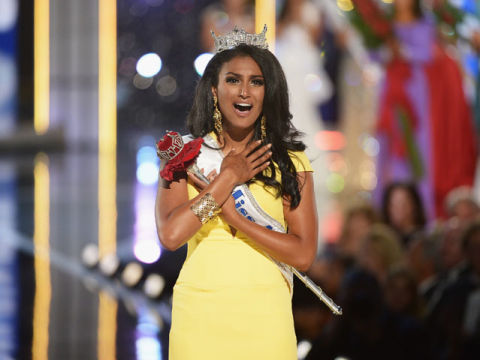
miss america 2014 nina davuluri Photo: Getty ImagesAdvertisement - Continue Reading BelowPhoto: Getty Images

The part of me that grew up South Asian in the States is secretly thrilled to see an Indian Miss America. I'm thinking of myself as a second grader in Missouri, drawing my face with a peach-colored crayon, until I realized there was a shade called Tawny (the most common mispronunciation of my name). For that kid, and so many others, Nina Davuluri's win is momentous example of #desipride.
More From ELLEBut it's only just now that I'm making this admission. I say I'm "secretly thrilled" because I'm tired of the brouhaha surrounding something as inane as a beauty pageant. And I'm tired of the knee-jerk racist response that followed the announcement that Davuluri had been crowned the winner.
This is a historic moment, as when any group "makes it"—Davuluri is the first Indian-American to win the pageant, and one of three Asian-Americans in the top five, including Rebecca Yeh (Miss Minnesota) and Crystal Lee (Miss California). Davuluri's win struck a chord with the masses of Americans who still believe Barack Obama is Muslim, The Hunger Games' Rue can't be black, and the cute kid from the Cheerios ad is Satan's spawn. Angry tweets flooded the Twitterverse: "I don't understand how you can be up for Miss America you're not American you're a f*cking dot head!! #MERICA"
Yes, the Miss America pageant is a quintessential all-American display, as is, sadly enough, the barrage of xenophobic tweets. We're a land built on difference and the fear of it. For me, the thrill of Davuluri's win fades when you consider what it takes to be a real-life Barbie doll. Davuluri's trainer told The New York Post that the pageant winner dropped over 50 pounds before stepping onto that stage to perform a Bollywood number.
Then there was that minor tabloid scandal in which Davuluri allegedly called former Miss America Mallory Hagan "fat as sh*%" while celebrating her win with friends in a hotel room. Davuluri has since denied making the nasty comments. All too familiar is that the competition to be prettiest, skinniest and smartest (in that order) revolves around women undermining one another's basic value.
While the self-proclaimed "Miss Diversity" has been cleared of the charges, it will be interesting to see where winning Miss America takes Davuluri. So far, she's appeared on Kelly & Michael with Mindy Kaling, another Indian-American woman who has received backlash for not having men of color love interests on her show. It's fitting that these two ladies should appear on television, side by side, breaking barriers, achieving firsts, and being criticized for not representing.
It's this need to have celebrities and Miss Americas represent us, which is so potent and dangerous. Nina Davuluri's win is a crowning achievement in a very narrow sense of the term. She's essentially fitting into a ready-made cutout of hegemonic beauty ideals—both in the U.S. and even in India, where Fair & Lovely creams, bleaching treatments, and blue contacts are standard practice in pageants. A woman of Davuluri's complexion would have a long shot at best at winning Miss India, a sad truth of the toxicity of Western beauty standards' global impact. When recognized in this context, that a figure like Davuluri would once be considered "too Indian" to win in the U.S., and is too brown to win in India today, that is when I am thrilled again that she's won.

2015年12月1日星期二

icona pop Getty ImagesAdvertisement - Continue Reading BelowPhoto: Getty Images
BFF pop duo Caroline Hjelt and Aino Jawo just released a new song off their much-anticipated album This Is...Icona Pop, which comes out on September 24 but can be pre-ordered on iTunes. We've already listened to the new end-of-summer jam multiple times today, and we can surely see it being a top hit during the NYFW after-parties this season. Stream it here now:

2015年11月30日星期一

Courtesy of MikohWorking women get all sorts of advice. Lean in, lean out, ask for a raise, but don't ask in the wrong way, be aggressive, but not too aggressive. We're also told to make sure not to forget about our personal lives, lest we end up foregoing families or love or travel or friendship in service of our careers. It's confusing and maddening, and we're all still struggling to figure it out.
"This Woman's Work" is an ongoing series meant to show how women in different industries are living their lives. We hope to show that there's no one "right" way to succeed. There are so many ways, and so many different experiences. Today we're talking to sisters Oleema and Kalani Miller, co-founders of Mikoh, the super sexy, fashion-forward swimsuit line.
Advertisement - Continue Reading Below

Describe a typical workday.

Oleema: Well, that's the best part [of the job]. No one day is ever the same as the next. I'm pretty much traveling year round. I'm more of a morning person than a night owl. At the old age of 26, I go to bed at 10 P.M. I'm not a big party girl. I like to wake up early and if I'm at home, I'll take my dog for a walk and get a coffee. I try to get outside in the morning. I think that's a good way to start your day—to do something active in the sunshine. From there, I try to go on my computer and get as much work done as possible.
More from A Day in The Life12 articles logo Created with Sketch. Maybelline ELLE + Maybelline How to Create a Dream Job Baking Glitter Cakes... Can Children's Toys Close the Gender Gap in... Meet the Woman With the Secret to the Perfect... Passion, Persistence, and Resolve: Carrie... Kalani: Even though I'm on the business side of things, Oleema and I lead a very similar lifestyle. I wake up and drink a cup of hot green tea or hot water with lemon. I love to go outside—every single morning I go out on the beach, and I jump in the ocean or the pool, and then I get on my computer. I think I spend more time on my computer than Oleema. Oleema spends more time finding inspiration and sketching. But we're both very active.



O: We definitely are doing things the unconventional way, which keeps it fun and keeps it true to who we are.

What were you doing before you came up with the idea for Mikoh?

O: We grew up in Orange County with the ocean as our backyard. We lived the quintessential Southern California lifestyle, so from day one we were always in bikinis, going to the beach every single day with our family. We started traveling from a really young age. After high school I knew I was definitely not going to take the conventional route of going to college. It was kind of a natural progression for me to go from wearing bikinis every day to creating them.

Was there one moment where you said to each other, "This is it! Let's make this a company?"

O: [The idea] came to life when I was traveling through Europe and Kalani was studying business at the University of California, Santa Barbara. With a deep love for travel and having grown up at the beach, I had a moment of realization that there might be a way to translate the lifestyle I loved (and was leading) into a profitable business. Since I was so passionate about this lifestyle, I thought others might be too. I remember calling Kalani at home, presenting the idea to her, and hearing her say, "When can we start?"
K: We were fortunate enough to have a supportive family that has helped us every step of the way. We raised the money internally to start the company, and although they always say not to mix business and family, we found that we couldn't have achieved our success without their love and support.

How did you learn how to design?

O: Both of my parents are designers in their own right. My father is a landscape architect and my mother went to school for interior design. When I was young, I started to sew for fun, and have been playing with fabrics and materials for as long as I can remember. My learning to design couldn't be less formal, actually. I've never taken a course or a class; I taught myself. I loved the challenge of figuring out the best way to bring my design ideas to life. Throughout the years, I developed a strong working relationship with our manufacturer and we work hand in hand.

Was there ever a time you felt you were treated differently than your male counterparts or colleagues? Maybe when raising money for the brand?

K: It's more that we're young and Asian [than female]. We look like we're 12 years old. People are more surprised that it's two young, successful women that started the brand.
O: Yeah. At first glance, they probably underestimate us because we're, like, 5'2'', tiny, Asian, literally can be mistaken for being underage when we fly. People think we'll be very well-versed in fashion or aesthetics, but I think once they're able to see us from a business perspective, they're more taken aback. But it's better that way. The element of surprise is always good.

What do you do to stay healthy?

O: What's most important to us is being outside. Even right now, it's kind of gray and overcast in California, but we're still outside doing things. Our mom always said, "Just get outside and get some sun." And it couldn't be more true. Even if you're in New York and it's snowing, it's important to get fresh air. I love doing Pilates. If I'm traveling in Hawaii I try to surf or go on walks on the beach. Being mindful of the different elements around you and choosing the better option whenever you can is very important.
K: For me it's being mindful and aware of what you're eating, but it's also about having fun. If you want to have that piece of cake, eat that piece of cake!
O: It has to be a combination of things that leads to a healthy lifestyle. You can't just do one thing and then go out and get drunk every single night. It's has to be combination of everything.
K: I also don't ever leave the house without putting sunscreen on my face, even if it's cloudy. I really don't want to get wrinkles. I think the best think you can do for your skin is to drink a lot of water.
O: I always put sunscreen on. One our friends started a sunscreen company called Shade Sunscreen that's really good. We like it because it has more of a matte finish and doesn't leave that oily, thick residue. Also, pretty much rain or shine, I wear Bobbi Brown BB Cream, which I love.

What advice would you give someone who wanted to have your job someday?

O: Be humble—I definitely don't know everything! Every moment I'm learning something new. Be humble and truthful and when you need help, ask for it. Always be gracious and grateful to whoever is helping you.
K: Mine is pretty simple: Just do what you love.
Oleema's FIT is Maybelline Fit Me Matte + Poreless Foundation in 230 Natural Buff.
Kalani's FIT is Maybelline Fit Me Matte + Poreless Foundation in 235 Pure Beige.

2015年11月29日星期日

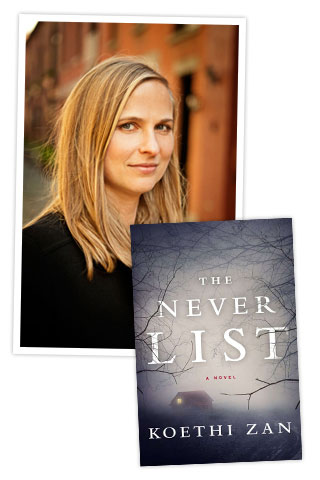
koethi zan the never list Courtesy of Pieter M van Hattem and Viking PressAdvertisement - Continue Reading BelowPhoto: Courtesy of Pieter M van Hattem and Viking Press
Now that we've devoured Koethi Zan's debut thriller, The Never List, we're ready to grill the author on the method behind her madness. At 12 pm EST, join us right here, in the comments section below, to ask the novelist your questions about this summer's buzzy—and timely—psychological page-turner, which follows a kidnapping victim's quest to take revenge on her abductor and solve the mystery of her best friend's death. From descending into the creepy online rabbit hole in the name of research—"I got so many viruses on my computer; I had to throw it out," Zan says—to the psychology behind Jack Derber, the BDSM-practicing professor, nothing is off limits. We've got your Twitter questions, and a few burning queries of our own, and we're ready to read between the lines.

2015年11月28日星期六

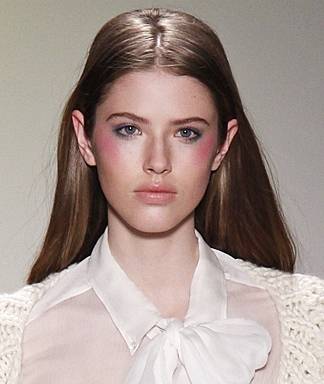
Fashion Model Courtesy of ADAMAdvertisement - Continue Reading BelowTo complement the bright, upbeat pops of color in ADAM's fall 2009 collection, makeup artist Romy Soleimani chose a similarly vibrant look for the face. "It's not `eye shadow' and `blush,'" she says of the aqua blue and pink framing models' eyes. "It's more about a feeling. The pigments start layering on top of each other like when paint mixes with water and all the colors flow together."

Soleimani says that because the color along the "crescent cheek-into-eye area" is the focus, she kept the rest of the palette neutral: "The girls with darker lips, we're using a tiny bit of M.A.C Lip Erase with lip balm to tone them down so that it's more of a soft baby pink. We're just lightly filling in the brow."
View more bright makeup from ADAM's fall 2009 show here

2015年11月26日星期四

Mert Alas and Marcus PiggottHere are some of the reactions to Calvin Klein's latest underwear campaign, starring Lara Stone and Justin Bieber, on the brand's Facebook page: "Ewwww!", "Puke," and  "Vomiting so strongly that I cant express how much you did screw this." My reaction? Bieber looks f*cking hot. I may be seven years older than the Biebs, but my attraction to him is real.

Let me back up: I've had a crush on Justin Bieber for a while (except for the years he wore that purple hooded sweatshirt). And I know that by admitting this I run the risk of a) being told I'm insane and b) being threatened by the all the Beliebers out there (Lara Stone is currently receiving death threats).  But I also know that I can't be alone in my Bieber lust. (I mean, look at those abs).
Advertisement - Continue Reading BelowI can easily track (er, defend?) the evolution of my crush.
Like any crush, it's essential that you have a baby picture to swoon over. The BABY BIEBER! Look at those eyelashes, those lips, those big eyes! Couldn't you just die?
Instagram More From ELLEThen there's the work-hard mentality. He struggled. He played on the street. He drummed his little heart out. HE GOT TO MEET USHER!

This brings me to what I like to call his "One Less Lonely Girl" phase. I'm no dummy. I know that this was a huge PR stunt masterminded by his manager, Scooter Braun (also hot), to make awkward pre-teens believe that Bieber may, one day, rescue them. Nevertheless, this could be my second favorite Bieber-stage. See below, and skip to 2:35.
Starts singing. Swoon. Changes octaves. Swoon, swoon. CHOOSES A GIRL FROM AUDIENCE AND BRINGS UP ON STAGE. Start sweating. Puts her on a stool. Heavy breathing. Circles around her. Seductive and slightly inappropriate! He promises to "put [her] first," and "show [her]what [she's] worth." This, I believe, is when the shift happened: Bieber became sexualized in my mind. He'd gone from the "aw, cute, want-to-pinch-your-cheeks" boy to the  "wowza, wanna see what's under that mesh shirt" man.
In September of last year, a medical study came out that found men under 5'9" were having more sex than their taller friends. So much for stereotypes, right?
The truth is, I've always thought the shorties were better in bed. It's simple science, if you ask me. They care more about performance.
Which brings me to the bigger point.
This:
THANK YOU CALVIN KLEIN. I already loved you for your minimalist, chic aesthetic and now I can drool over your campaign, stare at your Instagram, and walk to your SoHo billboard, staring up at my main man, Justin. Justin, who looks like his manliest, most controlled, and most confident self. And you know what, Calvin?  I'll gladly buy a pair of your underwear if it means I can be a little more like a girl Justin may want.
Here are some comments I received from friends and acquaintances  when I admitted to my crush:
"Gross."
"Weird! Creepy and weird!"
But to me, he fulfills a pretty standard checklist of things I've been attracted to for most of my life:
Bad boy that never actually does anything that badMusically TalentedTattooedVertically ChallengedI looked around the Internet to see if Mark Wahlberg was as divisive a guy to have a crush on back when he was Calvin's campaign boy, but apparently he was a more reasonable option. I think it's worth noting, for the record that Wahlberg is a full inch shorter than Justin Bieber. Haters.

2015年11月25日星期三

iStockphoto Photo: iStockphoto
Advertisement - Continue Reading BelowDAY 19: KICK BUTTS
Along with good habits like eating more fruits and veggies, it's imperative to do away with bad habits, especially smoking. It compromises your circulation (say goodbye, rosy glow) and contributes to internal inflammation, which rears its ugly head in the form of prematurely aged skin. Also beware of secondhand smoke, which breaks down collagen, damages DNA, and constricts blood vessels that deliver oxygen and nutrients to the skin's surface by up to 30 percent, resulting in a duller, less lustrous complexion. Applying an antioxidant-rich cream before and after exposure to a smoke-filled setting helps to counteract its damaging effects. You can also feed your body and skin with protective antioxidants by opting for red wine over face-drying alcoholic alternatives. Staying hydrated by drinking water throughout the evening will help you avoid a hangover—and parched skin—the morning after.

2015年11月23日星期一

britney spears new song for the smurfs 2 Getty ImagesAdvertisement - Continue Reading BelowPhoto: Getty Images
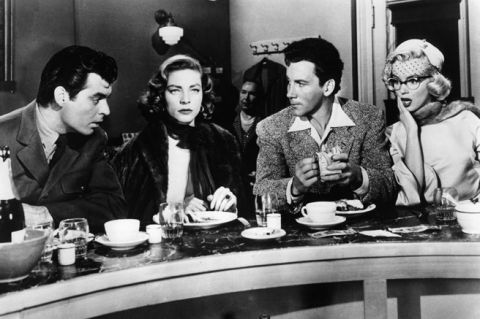
Britney Spears released her latest kid-friendly, techno-pop song, "Ooh La La," for the upcoming Smurfs 2 soundtrack. {Vulture}
Controversial designer John Galliano is reportedly interested in participating in a televised, tell-all interview with Charlie Rose some time this summer. {The Telegraph}
Giorgio Armani declined to join Italy's Chamber of Fashion, citing his disapproval of Italian brands that present fashion week shows outside of Milan. {WWD}
J.Crew's upcoming collaboration with the CFDA's annual Fashion Fund finalists will be available to the public a day earlier—on May 21. Get a head start and sign up for the pre-sale on the retailer's site. {Fashionologie}
CoverGirl will collaborate with The Hunger Games: Catching Fire on a Capitol Collection of beauty products, available this fall. {MTV Style}
The Alexander McQueen e-commerce website underwent a digital makeover to highlight past collections and better include its diffusion line, McQ. The luxury brand's mobile site will launch later this year. {WWD}
Sandro celebrated the opening of its first West Coast location at Caesars Palace's The Forum Shops in Las Vegas, last night with the help of fashion photographer Garance Doré. {Sandro Press Release}

2015年11月21日星期六

Getty ImagesAdvertisement - Continue Reading BelowIt turns out the brunch-time complaints that there are no good men out there aren't totally unwarranted—there's now census data to back those gripes up, according to the Pew Center. The organization's latest survey reveals that there are more unmarried Americans out there than ever before—and there's a reason: Women are seeking out men with established careers, and the population of guys that fit that criteria is declining, the Cut reports.

More From ELLESpecifically, 78 percent of unmarried women place "a great deal of importance on finding someone who has a steady job." And those steady job-holding men have remarkably started to disappear, with the ratio of dudes with jobs aged 25 to 34 available to every 100 women shrinking from 139 in 1960 to 91 today. Dandy!
This shortage is so bad that if all the ladies out there were looking for an "eligible" beau to buy them a glass of wine, nine percent of women would fail to find anyone "simply because there are not enough men in the target group," according to the report. (And this target group is based on employment alone and doesn't even touch personality, which is its own beast.)
Still, the Pew Center did offer some consolation: Young people don't care so much since marriage is less of a priority nowadays. A whooping 67 percent of people ages 18 to 29 believe "society is just as well off if people have priorities other than marriage and children." Which is wonderful because who needs a ring, anyway, with career, friends, travel, and more to focus on?
Photo: Getty Images

Kathleen Hale Kathleen HaleAdvertisement - Continue Reading BelowThis article originally appeared in the online magazine

My obsession with animals preexisted any trauma in my life. As a five-year-old I wrote a fully illustrated book titled Tigger Maskkir about circus animals that revolt and eat the clowns. My teachers thought I was becoming deranged but my mom explained that it had been going on since before the divorce. I interviewed neighbors about their dogs. I put my teddy bears and stuffed lions to bed every night under blankets of washcloths—I couldn't fall asleep until they were safely arranged like Tetris pieces on the floor, covering every inch of carpet. I once stood for an hour with my face against the glass at Sea World, trying to make meaningful eye contact with a manatee.
More From ELLEMy ritualistic obsessions are no longer limited to animals (currently, they include Diane Sawyer, The Slender Man stabbings, and eating bacon every day for lunch). I never look for things to grab me. They just do, and once they do, the obsessions usually continue until I'm so sick of them—or of myself for enacting them—that suddenly, and with a sense of great relief, I'm repulsed.
On other occasions, it's as if I can't stop. Like on my 18th birthday.
The night was raucously fun—I must have stolen the karaoke microphone 11 times—but as dawn broke, my friend asked if I could please stop singing Limp Bizkit. She needed to sleep.
"Believe me, I'd love to, but I physically cannot." I was tired, too. I'd sung "Faith" twice, but five was my number and I was halfway there.
And sometimes I worry that telling the story I'm about to tell you is a compulsion, like counting. Giving testimony under oath was supposed to bring closure. But here I am, so sick of my own voice. The urge persists.
*"Playing possum" means "pretending to be dead." The idiomatic phrase stems from behavioral traits of the Virginia opossum, which is famous for feigning death when vulnerable. —Ann Bailey Dunn, "Playing Possum." Wonderful West Virginia
This instinct can be counterproductive: for instance, opossums scavenging for roadkill may 'play possum' in response to the threat posed by oncoming traffic, and consequently end up as roadkill themselves. —"Virginia Opossum." Mass Audubon
*It was my first day of college. After unpacking, my mother and I went to the Habitat for Humanity sale and bought a broken futon for 20 dollars. We carried it back across the quad, up a few flights of stairs and into my new common room. And then my back started hurting. Flustered by the fact of our impending separation, my equally obsessive mother became fixated on the idea of getting me a massage. A fan of free massages, I traipsed alongside her through Harvard Square, looking for options.
Every place was booked except for a store called About Hair, which offered haircuts and massages in addition to selling antiques. The store was so stuffed with secondhand items that some of them were arranged outside. A dark-haired, sullen-looking girl around my age was keeping an eye on them.
Advertisement - Continue Reading Below
Advertisement - Continue Reading BelowPhoto: Getty Images
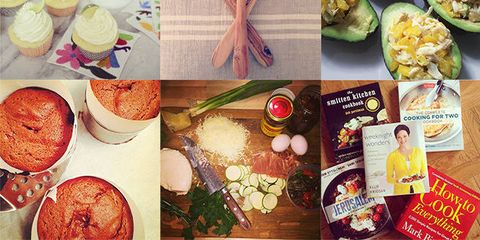
Do The Olds have a point when they bemoan our generation's inability to make it through a meal, a party, or even a sentence without glancing at a screen? Sure. But we're starting to suspect that all that Snapchatting may be supporting a certain vein of social change that we can ALL get behind.
Take, for example, the new Miss Idaho, Sierra Sandison: The 20-year-old stepped out onstage on July 12th in the requisite bikini —and an insulin pump, because Sandison is a Type 1 diabetic. Though she used insulin injections when she first began competing, she credits her decision to compete with her pump visible to the increased comfort level she feels thanks to social media—and was richly rewarded with an outpouring of Facebook love from strangers all over.
More From ELLEPerhaps she was inspired by 23-year-old Bethany Townsend, whose bikini-clad selfie with her colostomy bag
in full view quickly became a viral sensation—and Townsend became an Internet hero for the Crohn's disease community. It's hard to imagine a condition that's more difficult to make sexy, but this millennial? She made it happen with one confident snap of an iPhone.
Could the rise of the selfie be ushering in a new level of openness and acceptance? Let's hope so.
Perhaps we can thank the warts-and-all reframing of what it means to be a public figure that we call reality TV. In a world where a wealthy Manhattan socialite with a graduate degree will throw her prosthetic leg at someone on national television what on earth could we be afraid of exposing anymore? And with smartphones that put image creation in the palm of every individual's hand, along with the social media platforms to share those images on, we're surfing the cresting wave of millions of images created by millions of individuals who've seen , since birth, that everyone really DOES get to be famous for fifteen minutes.
The selfie trend is one that makes sense for young people. Writing for Psychology Today, Pamela Rutledge, PhD. posits that selfies are "ripe for exploration and identity experimentation, particularly among ages where identity formation and emancipation are key developmental tasks, as well as for those who are still interested in looking at themselves."
So expect more Sierras. Expect more Bethanys. Expect more women like Samm Newman, who suffers from no disability except a lack of respect from her fellow humans—but is determined to overcome that too. This is a generation of young women who yes, may be damaging themselves by the constant exposure to criticism, but who are also learning in their teen years something it took older women years longer to learn: the fine art of fighting back against shame. They're here. They're clear. And they're armed and ready to change how you see them for good.
Related: The 30 Most Inspiring Women You Need to Follow on Social Media
Related: Cara Delevingne Just Took the First Runway Selfie
Related: Joe Biden Posts Ultimate Inaugural Selfie

Getty Images; InstagramLast March, in celebration of the 50th anniversary of Betty Friedan's The Feminine Mystique, I interviewed my mom about the book's lasting impact. When I asked if she thought my generation was perpetuating a similar myth—the "mystique" being that post-WWII women were told they should be content being housewives—she responded, "That's something for your generation to think about." But like most things my mom says, I didn't give it much further thought. Until last night.

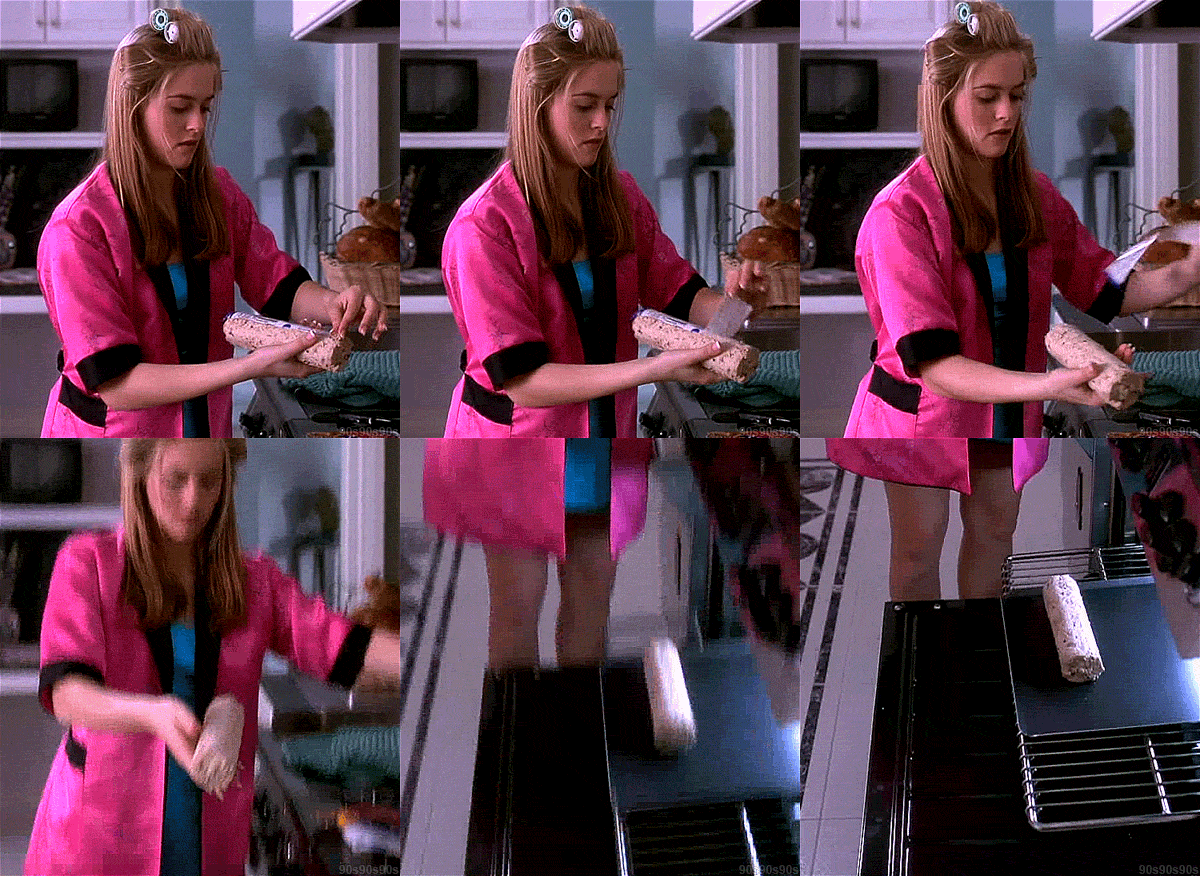
Advertisement - Continue Reading Below Yesterday, my husband started a new job, and I wanted to do something nice for him. Instinctively I went to Whole Foods and bought dinner—some fresh shrimp cocktail and burger meat—to prepare. While I was slicing the tomatoes and prepping the patties, I became increasingly frustrated. First off, I am a terrible cook. I literally have no idea what I'm doing. But my lack of competency in the kitchen (and the fact that my husband wouldn't care if we had to order in for the umpteenth night in a row) didn't make me feel liberated—it made me feel inadequate. Furthermore, I had made a mess I would later have to clean up. And, you know, I hate cleaning up.
More From ELLERelated: Millennial Men Willing To Relocate for Their Lady's Career
We may no longer live in a world that peddles vacuum cleaners and aprons as the benchmarks of a thriving home, but what about Vitamixes, homemade floral arrangements, designer candles, and farm fresh produce? Everywhere I look (and especially while thumbing through Instagram), having (and making) aspirational home décor seems to bring a generation of hard-working women joy. And there's currency given to the woman who not only has an awesome career, a kickass body, and a handsome husband, but also delights in preparing a lovely meal and capturing it for the world to see in the perfectly filtered 'gram. Emily Schuman, who founded her blog Cupcakes and Cashmere in 2008 with the intent to "elevate everyday life," regularly posts pictures of her immaculate living spaces, hostess gifts, and her perfectly manicured hands clutching bushels of fresh picked flowers for her 210,000+ followers. In 2012, she galvanized her blog's success into a New York Times best seller: Cupcakes and Cashmere: A Guide for Defining Your Style, Reinventing Your Space, and Entertaining With Ease.
Getty Images; InstagramBut, for the real woman, this shit isn't easy—it's just supposed to look like it is.
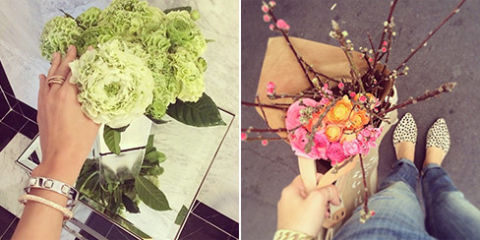
We may continue to argue whether or not women can "have it all," but the uptick in celebrity lifestyle blogs seems to suggest that you don't really have it all unless you enjoy curating an impeccable home. And celebrities, for whom the world spins on its axis, are helping to propagate the message: There's Gwyneth Paltrow's GOOP, Reese Witherspoon's Draper James, Meghan Markle's The Tig, Blake Lively's impending "lifestyle" project (which launches later this month), and now, Ellen DeGeneres' E.D. Et tu, Ellen?
Related: Do Millennials Really Need Their Own Targeted Line of High Tech Skin Care? Beauty Companies Think So
But what does "lifestyle" really mean? It used to be what went on behind closed doors; these days it's a public display of wealth, taste, and time management. And whether or not the indicators of a well-lived lifestyle fit into my schedule, I often find myself imitating the habits of the well-tended women I follow on social media.
Things I've bought, or registered for, because someone else celebrated their excellence (in no particular order): a slow cooker, impossibly tiny stemless glassware, Le Creuset cookware, fresh basil for my windowsill, a French press, Turkish towels, and an avocado pitter. For whatever reason, when I see other women casually brandishing these tools like mere extensions of their perfectly manicured hands, I feel a pang of envy. I, too, want to be effortlessly next-level glamorous. But how did glamour boomerang back into the home?
Getty Images; InstagramIn the end, the burgers were terrible. I undercooked them so badly that I had to encourage my husband to stop eating his when I saw how mealy the center was. I even e-mailed my best friend, wracked with anxiety: "I just tried to make hamburgers, but they were basically raw," I wrote. "I think we may have E. coli. Or Mad Cow. Do we? I cooked it! Just not long enough, I guess? I have no chef's instinct." Moments later she e-mailed me a description of how to know when meat is thoroughly cooked followed by a second message. "Not to worry," she wrote. "I think it's just practice." But in a world that celebrates perfect, is there room for practice?
Getty Images; InstagramRelated: Ask E. Jean: How to Live Life in Your Twenties

2015年11月20日星期五

Claude AttardAdvertisement - Continue Reading BelowPhoto: Claude Attard, Pont des Arts
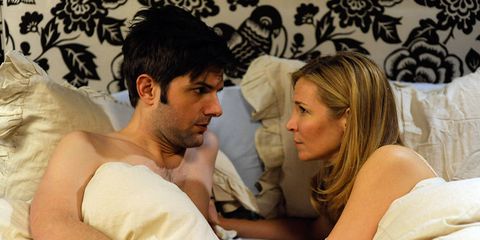
A portion of Paris' famous pedestrian bridge collapsed under the weight of too much love over the weekend. The Pont des Arts bridge has been victimized by love clichés since 2008, when couples began pinning padlocks to its railing to symbolize their enduring affection.
But the bridge is starting to say, "Fuck that."
Police evacuated and redirected travelers after the 2.4-meter section fell. Meanwhile, Parisian panties are all wadded up as local scoffs for the lover's ceremony abound.
More From ELLEAccording to No Love Locks Facebook page and our only Francophone friend, Bing Translator, Stefan Schneider is one of many saying, "UGLY, remove these trash-locks!"
Structural stability of the landmark has become a concern for many, and, being Paris, aesthetic value is a big deal.
When similar love locks recently began plaguing New York's Brooklyn Bridge, the Department of Transportation actively put a stop to it. CBS New York claims the Big Apple removed over 5,600 locks in less than a year.
Angry Parisians hope their new mayor, Anne Hidalgo, will follow suit with her new plans to pick the 700,000 locks. Frenchman Patrice de Franchi seconds the motion. "If someone gets hurt with these shits," says Franchi, "I hope that the responsibility of the mother Hidalgo will be engaged!"
Weather's miserable today but it's Friday and I'm feeling the @instagram love. Merci beaucoup for following along! ❤️ #Paris #instagram #vscocam #pontdesartes
A photo posted by Marissa Cox (@ruerodier) on
Lots of love for Paris
A photo posted by Kaia Gerber (@kaiagerber) on
From the editors of
From: Esquire

Everett CollectionDear E. Jean: My best girlfriend says women should feel "empowered" when we hook up with guys, because it means we've "worked" them. But lately I don't feel empowered. I feel guilty.
Here's what happened: My guy friend had been pursuing me, and last weekend, because of a strong cocktail, I decided to go for it. He came over to my place; we got a little more drunk and did our thing. To my own amazement, I was a wild thing in bed—definitely not my normal bedroom demeanor! Every time I think of that night, I blush.
Advertisement - Continue Reading BelowHe has called me several times, and I absolutely can't bring myself to return his calls. He obviously loved my wilder side. I don't understand why I am so scared of it. Am I just not the kind of girl who can have a one-night fling without feeling filthy? Or am I avoiding him because I lack confidence?—An Amiss Miss
Amiss, my mooncat: Please. Any young lady who to her "own amazement" romps and somersaults herself into wild, giddy, ecstatic, blushing bliss is not allowed to nerd out to Auntie Eeee with witless tosh about feeling "filthy."
More From ELLEYou're as pure as rainwater, hunny. It was not a "one-night fling." Why? Because you're picking up the phone right now and calling the boy. He brings out the best (read: animal) in you. Don't you know that some people go their whole lives without letting loose? Here's a lad who's obviously a good match for you. Yes, it's scary, but only because you believe you have to frolic on the "wilder" side next and every time after that. You don't.
P.S. What your best girlfriend said about "working" guys bothers the heck out of me. Women are "empowered" by joy, discipline, drive, ambition, humor, money, compassion, a good wardrobe, and real belief in themselves right down to the core of their spleens...not by—uh, hello!—hooking up.
E-mail your questions to e.jean@askejean.com
Related: Ask E. Jean: Am I Being a Jerk By Holding a High School Grudge?
Related: Ask E. Jean: How To Play a Dude and Win
Related: Ask E. Jean: How to Get Rid of a Friend

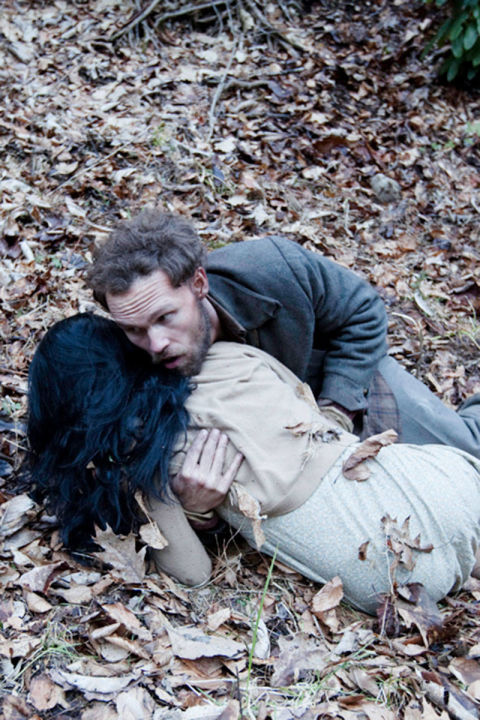
Advertisement - Continue Reading BelowIn James Franco's latest directorial effort, Child of God (based on the Cormac McCarthy novel of the same name and out August 1), the protagonist, Lester Ballard (played with furious intensity by newcomer Scott Haze) is an outcast. While he may or may not be mentally challenged—a lot of his decision making certainly seems impaired—what's most striking about him, other than his penchant for dead girls, is his will to live according to his own standards. After he's had his land sold out from underneath him, he becomes a lawless man squatting in the rural outskirts of Sevier County, Tennessee. Even in circumstances more dire (and way grosser) than humanly imaginable, Ballard starts each day with intention. Even when trapped in a corner, he's able to cockroach out of it. His daily life is a living hell and yet, he doesn't want to die.
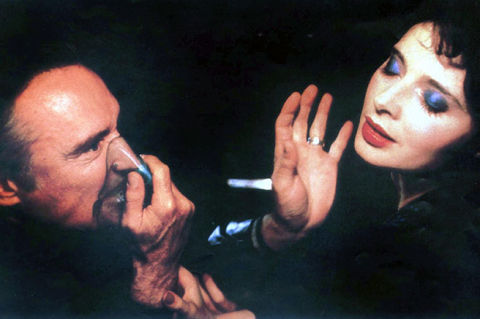
More From ELLEBut back to his penchant for dead women. Over at Esquire, Stephen Marche comments that sexually explicit films such as Blue is the Warmest Color and Nymphomaniac (about which I have also opined), are machinations of "someone else's porn." And to a certain extent, I agree. What seems risqué, lewd, or sexy to one person may seem benign, commonplace, or vanilla to someone else. And vice versa. But for anyone who's seen David Lynch's Blue Velvet, depictions of bizarre, porn-level proclivities have been de rigueur since the '80s. Feeling tortured instead of titillated during a sex scene isn't a new phenomenon.
"Blue Velvet"; Photo: Mary Evans/Ronald Grant/Everett Collection
Related: Love in the Digital Age: 'Eternal Sunshine,' 10 Years Later
And then, there is Child of God. As Variety pointed out in its post-Cannes review, the film is faithful to its literary namesake. Even a scene in which Ballard wears a dress and dons a wig made from a scalped woman's hair is pulled directly from the pages of McCarthy's 1973 novel. However, the most alarming moment comes in the form of sociopathic tenderness: After discovering a dead girl in a car (she and her lover have seemingly asphyxiated themselves as a result of living in a town more depressing than Winter's Bone), Ballard proceeds to have sex with her body, and then makes her his live-in girlfriend. Yup. As questions about her rotting corpse infiltrate your subconscious ("But does she smell yet?" You force yourself not to wonder), he dresses up her limp body in an off-the-mannequin frock, brushes hair off her ice-cold forehead, and chides her for being "the most forward girl he's ever met." It's a pretty traditional preamble to casual intercourse, really. That is, if you don't factor in that she's dead.
Of course, this isn't necessarily intended to be erotic. Director James Franco probably wants us to feel uncomfortable—to force us into a small room with a necrophilic murderer and dare us not to squirm. But he does so without any judgment. There is no moral axis guiding the viewer to reprimand or relate to Ballard. It's just there. And for most, it's awful.
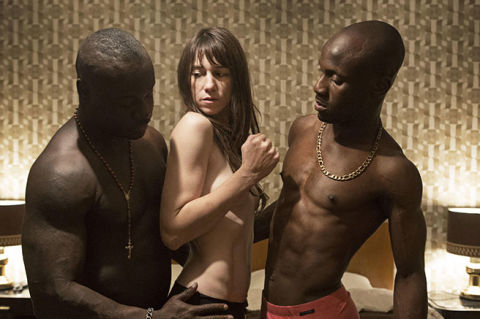
"Nymphomaniac"; Photo: Zentropa Entertainments/the Kobal Collection
I think a lot of what we're reacting to when we criticize graphic sex scenes we're confronted with is our own compulsion to abide by societal standards. If we say the sex in Blue is the Warmest Color "bored" us, then we're communicating to others that we respect women and refute the male gaze. If the sex in The Wolf of Wall Street upset us, then we're subtly saying that we're upstanding citizens who would never reduce women to playthings. And if we found the sex in Nymphomaniac about as erotic as watching paint dry, we clearly have a healthy appreciation of intimacy. Our statements on these movies are just as much about us as they are the art. But by damning these depictions, we are also damning a part of our psyche. So what if these movies turned you on? What if Child of God turned me on? Does that make me an outlaw, too?
"Blue is the Warmest Color": (c) Sundance Selects/Courtesy Everett Collection
Related: In Pursuit of the Full Body Orgasm
Related: My Life as a Sex Phone Operator: Dialing In

2015年11月19日星期四

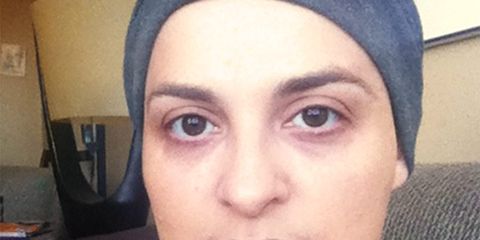
Courtesy of the authorI catch fragmented glimpses of my bald reflection in the elevator mirror as I go up, up, up—to a white-walled conference room, where a small herd of well-groomed doctors, all equally inscrutable, awaits. Dr. Cryptic, a top oncologist here at Minnesota's Mayo Clinic, shuffles papers in a file larger than any 34-year-old ought to have. My finger absently traces the Port-a-Cath jutting from my clavicle when he looks at me and asks: You're sure you want to do this by yourself…?

Courtesy of the author Courtesy of the authorAdvertisement - Continue Reading BelowThe answer is yes. It's always been yes. The first word out of my mouth as a baby was myself. From that point on, my parents engaged in a relentless battle: their instinct to nurture me (as they did my perfectly docile older brother) versus my fight for independence. But even then, my mother and father swore that everything that made me a pain in the ass as a child—the strong will, the determination to make my own decisions—was going to make me an excellent adult.
More From ELLERelated: Broadway Star Valisia LeKae: How My Cancer Diagnosis Changed My Life for the Better
So they lovingly looked the other way, perplexed, as I evolved from an adolescent TV junkie into a nature-loving, hiking, ice-fishing teen who eschewed dance recitals in favor of solo night hikes near our New Jersey home, who swapped prom gowns and heels for tangled hair and fishing gaiters. The only time I recall asking my parents for something, it was permission to skip two weeks of my sophomore year of high school to travel through Eastern Europe to research a play I'd decided to write. Later there were solo road trips to see the world's largest ball of twine and writers' retreats by a frozen lake in northern Minnesota. Contrary to my Jewish roots and my nascent Hollywood dreams—by third grade I'd decided to be a writer—I craved fresh air, dead silence.
Related: How to Reduce Your Breast Cancer Risk
So when the Hollywood writers' strike hit in 2007, six weeks into my first bona fide job in the business as a writers' assistant on HBO's True Blood, I didn't call my parents in a panic. I hastily threw together a backpack and hit a two-day hiking trail. I was gloriously alone. Euphoric—until a few miles in, when my foot got lodged in the roots of an oak, and my entire body crumpled, tearing cartilage, cracking my kneecap in half, and instantly turning my leg three shades of blue.
Four surgeries over the next four years couldn't fix it. And walking on a knee with only 17 percent of its cartilage was searing. But for me, asking for help would have been infinitely more crippling. So I kept plugging away. I wrote my first True Blood episodes. Costumers decorated my canes for premiere parties; actors stole my crutches for sport.
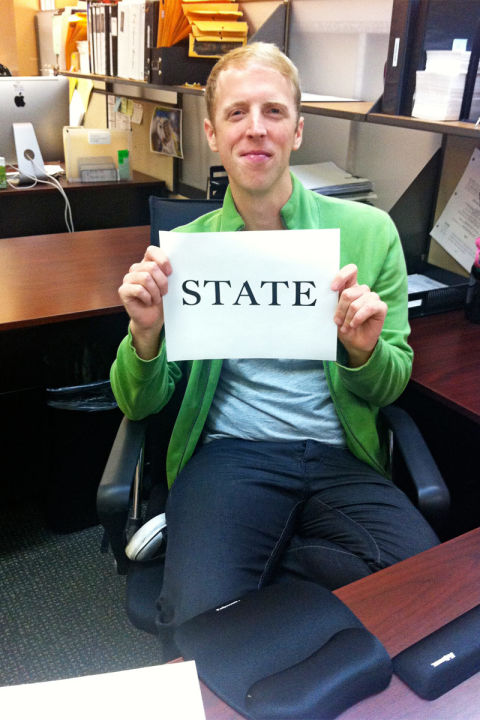
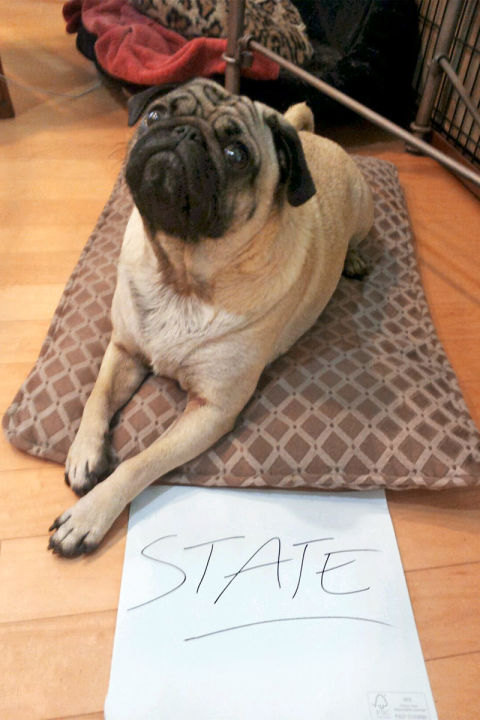
My salve came in the form of TV, of course, in a stack of Friday Night Lights DVDs filled with Coach Taylor's epic speeches about character and beating the odds. In one episode, the team is down, humiliated; the players on the verge of quitting. Coach goes to the locker-room whiteboard and silently writes state—shorthand for the team's ultimate goal, to make it to the Texas state football championships. State was the victory that would make every battle along the way worth it. "State" became the team's battle cry. And, in a very real way, it became mine, too.
Courtesy of the authorLast year, still in pain, I crammed in knee-replacement surgery just before beginning my second season writing for the CW's The Vampire Diaries. I'd expected my surgeon to wake me from my morphine haze to say the problem was finally fixed. Instead he said, "There's something we needed to discuss."
Chondrosarcoma. One of three forms of primary bone cancer. They'd discovered a mass and removed it. So my leg was now fully functional, tumor-free. But a PET scan had revealed a tumor encroaching on my spinal column. "I've never seen anything like this, especially in someone your age," he told me. "Nothing about this is going to be easy."
I sat there, dazed, as he rattled off statistics. Chondrosarcoma is rare as hell: It accounts for less than one percent of all cancers, and the average age of diagnosis is 51—it's almost unheard of at my age. Mine was grade three, fast growing, which instantly placed me in the "poor" prognosis column and at high risk for recurrence. Worse, chondrosarcoma tends to defy conventional chemotherapy and radiation. Surgery is usually the best option, but my tumor had grown far enough into my spine that removing it carried a high risk of paralysis. Chemo might not work, but it was still my best chance. And I needed it immediately.
Ironically, chondrosarcoma wasn't necessarily the reason my knee hadn't healed—cartilage is incredibly difficult to regenerate under any circumstances—but the injury was the only reason they found it. "You're lucky we were looking in the first place," the doctor said. I was still digesting the juxtaposition of rare cancer and lucky when my mom entered the room, cutting him off. When he left, I told her the knee replacement had worked. And that's all I told her.
Advertisement - Continue Reading Below
Getty ImagesDEAR E. JEAN : Grab a box of Kleenex. This is a sad one. My guy of three years is funny, smart, stable, and bears a striking resemblance to George Clooney—but he's a bit of a bore in bed. I feel you can't teach an old dog new tricks (he's 37), so since everything else is perfect, should I let this slide? My life is in your hands. No pressure.—He's Vanilla, I'm Rocky Road
ROCKY, HONEY : Phoo. Just tell the old geezer what you want. (And if you happen to be wearing a raffish pair of boxsies with crème de menthe thigh-high satin boots and begin by enumerating, in Kama Sutra-licious detail, what you looove about him, and employ a little "show and tell" to illustrate what you like, the lad will kill himself to be your hot dog.) Ancient relics of 37 are more adept, ardent, and eager when it comes to learning new tricks than 17-year-olds (who are too busy acting 37).
Advertisement - Continue Reading Below

ivf Splash NewsAdvertisement - Continue Reading BelowPhoto: Splash News
"You think your uterus is why you're here, but that's not why you're here," the fertility doctor said, sitting behind his desk in a crisp white lab coat, his name embroidered in bright blue thread. His smile was broad and slightly distorted. He reminded me of a car salesman.
Doc proceeded to prattle on while the clock—both proverbial and literal—was ticking. We'd paid $235 for the half-hour consult. What was that, like eight bucks a minute? I just wanted to shake him and go, "Dude, can I have a baby after 40 or not?"
More From ELLEAfter three years and $47,000 (and still no baby), those first few hundred dollars seem like nothing. Assisted reproduction is a $4 billion industry yet IVF has a 70 percent failure rate in the United States, according to the Center for Disease Control and Prevention. The odds for women over 42 are so low some clinics won't even offer IVF to women of that age—so why would anyone in their right mind even consider it?
Because what they're selling is hope.
I spent a good part of my thirties living in Aspen, Colorado, enjoying a fruitful career as a freelance writer, and indulging in the lifestyle of a glorified snowboard bum—not exactly what you would call "family planning." I was 41 by the time I got married. "It's not every day you get to give away your 41-year-old daughter," my Dad joked during a toast at our wedding. But Ryan was worth the wait.
Related: Fertility Treatments: Would You Get Selective Reduction?
The wait didn't serve me so well when I was finally ready to think about having a baby. Getting pregnant in your early forties isn't just difficult—it's also highly unlikely. Now that I'd spent my prime childbearing years doing whatever it was my little heart desired, I was desperate. We were ready to do whatever it took, and to spend whatever it cost.
It was pretty clear from the minute we pulled into the parking lot at the Colorado Center for Reproductive Medicine that baby making is a booming business. Their main location occupies an entire building outside Denver, a three-story, multimillion dollar facility with a private surgery center and an on-site fertility laboratory. The massive lobby buzzed with activity as nurses in lab coats ushered patients around with the detached friendliness of flight attendants. There were lofted ceilings, a giant water installation, and an espresso bar. It's the clinic E! network host Giuliana Rancic chose to document the birth of her son via a gestational surrogate on the reality TV show Giuliana & Bill.
Our doctor reassured us I still had a shot at IVF, even at 43, thanks to a new development in genetic testing known as Comprehensive Chromosome Screening (CCS). It would cost us an extra $5,500, but when you're throwing down 30K for a designer baby, what's an extra five thousand?
Related: Maybe Baby: Infertility's Controversial Cure
"That's a small price to pay for a human life," my Dad had said.
More than empty promises, what really drove us to keep spending was hope. Hope is like a drug that poisons the rational mind with fantasy about the future. So what if your roots are gray and you love Botox and you're a beat away from menopause? Just let science take over where nature left off. All you have to do is put your body, your heart, and your wallet on the line.
In the end, it turned out I was there because of my uterus. I had a malformation that required surgery. My new uterus cost another $2,800. I thought, "Who gets their womb renovated at 43?"
That surgery was only the beginning of what I put my body through: the injections, the bruises, the drugs, the anesthesia, the swollen ovaries, the hormones, the mood swings, the post-op bloating, and the weight gain. There was also the emotional torment: the day counting and calendar marking and the praying. Who cares if I'm an atheist? Maybe God will do me this one solid. Oh, and if you're trying to kill your sex life, this is a great way to do it.
Related: Women and the Weed Business
When we ran out of money, we borrowed more. I felt like an addict, doubling down on a bet when I knew the odds were against us. So when the first round went bad, we did a second round just to be sure.
Of course, we lost. And I was left with more questions than answers. At what point, I wondered, are doctors simply exploiting our deepest, primal longings? Is that what medicine should be?
Five days after my second and last egg retrieval, we received a call from the embryologist. All 20 of our embryos had died. That was the last time I heard from anyone at the clinic. There was no call from my doctor, or my nurses, no explanations or reassurances, no one to check in and find out how I was doing. It seemed as if I was nothing more than a bad statistic, an expelled patient who had put a ding in their precious success rates.
No one wants to hear a story with a sad ending. "You can always adopt," people might say. Or, "I have a friend who used a donor egg." But what they don't realize is that not only did we run out of money, we ran out of something far more important—hope.

Sony Pictures/Courtesy Everett CollectionAdvertisement - Continue Reading BelowPhoto: Sony Pictures/Courtesy Everett Collection
Like every good Jewish New Yorker, I began seeing a therapist at an early age­­—sporadically at first: once after a childhood trauma (age 5), another time after a car accident (age 7), and then regularly after my parent's divorce (age 8).
Related: The Truth About My Adderall Addiction
Even at five and I found the whole thing entirely ridiculous. I was asked to draw pictures. I took a Rorschach test, which I found to be a snooze. I remember wondering why anyone would care what I thought the images were representative of. After all, no one famous painted them.
More From ELLEOnce I was in therapy regularly, it was just sort of something I did because it was something that was scheduled. I was an incredibly anxious pre-teen and that anxiety only became worse as I got older.
From age eight to 20, I was more or less in and out of therapy, taking breaks here and there. It did little for me, mostly because I knew more about myself than any of the women I was speaking to.
Related: The New Science of Addiction: Is It Time To Rethink Rehab?
I knew why I was anxious (control issues). I knew why I had control issues, where they stemmed from. I just didn't feel like I was getting any actionable help in figuring out how to fix the problem. I felt like I tricked all the women I was seeing. I'd talk about stuff that I didn't really have problems with so I didn't have to talk about the real problems I was having. I knew these doctors wouldn't be able to fix me. I didn't need to talk about my mother or my father. I didn't really have issues with them.
My sophomore year of college things came to a head. I found myself in a shitty relationship that I needed to get out of, and when I asked my therapist for suggestions on how to end it, I was met with a blank stare and a "Well, let's explore why you can't figure this out and why it's so difficult for you."
Related: Is It Okay To Feel Traumatized When A Relationship Ends After Only Two Dates?
I wanted to throw the Kleenex box at her head, but didn't. It wouldn't have had much physical impact.
When I saw my psychopharmacologist a week later (I saw a different doctor who prescribed me my medication), I decided to ask her opinion. I wondered if this was just was therapy was like.
She was a real ball buster, a real tell it like it is sort of lady, and looked me square in the face and simply said: "See a man." She handed me Richard's number (yes, his name is Dick), and a week later I sat on a new couch. And I've been seeing Dick for over a decade.
I'll start by stating the obvious: Therapy is a wildly personal thing, and whatever works is great. I have friends and family members who swear by their female therapists. I've spoken to my girlfriends who can't imagine talking to a man about their issues that they are so sure only a woman can "really" understand.
Related: Hand-On Healing: Why Women Are Turning To Manual Therapy
For me, seeing a man completely changed the game.
I can't trick him. I don't know how his mind works. I don't know what he's thinking, like, ever, and he smells my bullshit from a mile away. I'm not saying there isn't a woman out there that couldn't do the same, but I haven't found her in a therapist. There are weeks I go in swearing I won't tell him that one thing I don't want to talk about, and by the end of the session, he knows all.
He gives me actionable advice. We delve deep into the reasoning behind the who, the what, the why, but we also reach conclusive decisions regarding what to do. Instead of spending hours, weeks, months, even years contemplating the past, we work on the future. It gives me something tangible that I can carry with me.
He holds me accountable. When I lie to him (shut up, you all lie to your therapists), when I leave something out of a story and then casually slip it in three weeks later, when I go back on a promise I made to myself, he calls me out and makes me talk about it. My female therapists of yesteryears would quietly pat me on the back, say it was okay, forgive me. I must be so stressed. It must be so hard. Richard understands it's hard. He also understands the importance of honesty.
Related: Ask E. Jean: I Need Therapy To Deal With My Therapist
We laugh. Laughing in therapy is something that I never thought was important, or even possible, or even proper. I was always bored with my other therapists. I'd yawn an approximate 28 times per session and wonder if it was appropriate to curl up in a ball and nap. (I asked Richard this, by the way. He said if I wanted to nap it was fine. "It's your money," he said.)
There's never any passive aggressiveness. I never have to wonder if he's thinking something and not telling me. I never have to wonder if he's holding back. I remember leaving female therapists' office wondering what they really thought about me—if they went home and told their friends or husbands about their wacky patient with the [insert problem of the day]. I'm pretty sure I know exactly what Richard thinks of me, and if I'm wrong, he's good enough to make me feel that I do.
Richard really made me understand something, which I really never grasped for the 15 years I was seeing other doctors. Therapy is not one thing for all people. Therapy is definitely not one thing for all women. For some people it's about childhood, for some people it's about sadness. For some it's super abstract, but for others it's not. For others, like me, you can chart your issues so clearly (and we all know that men are much better when things are crystal clear).

2015年11月18日星期三

sarah neufeld Courtesy of Sarah NeufeldAdvertisement - Continue Reading BelowPhoto: Sarah Neufeld

Joining Elle.com as our guest blogger won't be the only first for violinist Sarah Neufeld this summer: After ten years of ensemble playing with Arcade Fire (their new album will be out on October 29) and Bell Orchestre, Neufeld is making her solo debut with the album Hero Brother (dropping August 20). In addition to being a critically acclaimed musician, Neufeld is the co-owner of (and an instructor at) the NYC outpost of Moksha Yoga. The studio, which offers a hot-yoga method, has been opening locations worldwide over the past year. While wellness and rock 'n' roll might seem an unlikely pairing, the Vancouver Island native strikes a harmonious life balance. Get inspired by her weekly photo diaries: Click here for the first installment.

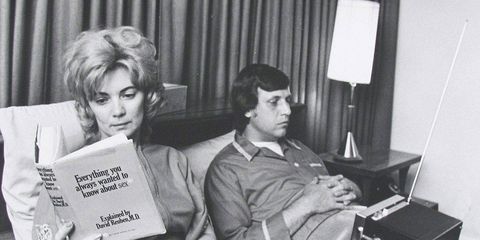
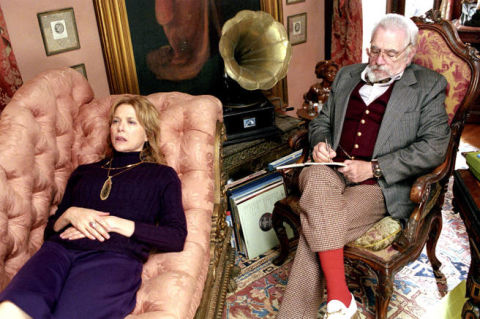
patients with benefits Folio-ID.comAdvertisement - Continue Reading BelowSo this is it, I think as I'm led into what looks like a guest room. Three windows, shutters partially closed, face the backyard; a queen-size bed sits center stage. It's pretty unremarkable as beds go, with white-and-beige plaid sheets, a pair of pale blankets, and a dream catcher hanging overhead. It isn't exactly what I'd expected, but then, I really didn't know what to expect. This is the bedroom that Cheryl Cohen Greene shares with her husband—and hundreds of other men. Call it her home office.
More From ELLECohen Greene isn't a prostitute. She's a sexual surrogate, someone paid to teach men—late-in-life virgins, the disabled, abuse or trauma victims, and those with erectile dysfunction, Asperger's syndrome, self-esteem issues, phobias, or crippling performance anxiety—to get it up and get it on, first with her and then, in theory, in relationships with real partners. Cohen Greene is a certified sexologist with a doctorate in human sexuality (DHS) from the Institute for Advanced Study of Human Sexuality in San Francisco; for 19 years, she was a member of the San Francisco Sex Information training staff, which provides sex info free of charge through its website and hotline. As a surrogate, her technique is more show than tell: Part lov­er, part wife, part shrink, part confidante, she guides men through relaxation techniques and eventually through their and her erogenous zones, teaching them how to communicate, how to touch, how to be touched.
"I like to call myself a surrogate partner therapist," Cohen Greene says, in a thick Boston accent that flattens her a's and eliminates her r's. "Because that's what I am, a temporary partner." It's an accent that Helen Hunt nailed in last fall's The Sessions—the Oscar-bait film that has put Cohen Greene at the forefront of her little-known field. The movie was based on a 1990 article by poet Mark O'Brien (played by the excellent John Hawkes), a polio survivor mostly confined to an iron lung since childhood, who, in his late thirties, became valiantly determined to lose his virginity—with Cohen Greene's help. The film takes artistic license with some aspects of surrogacy; it downplays, for instance, the role usually performed by sex therapists, who form a sort of trinity with surrogate and client. But it accurately depicts Cohen Greene's unpretentious warmth, her sometimes hilarious matter-of-factness, and her unusual career skills: utter open-mindedness, intuition, and a deep well of tenderness.
In one scene, when we watch Cohen Greene kneel over a bed and gently kiss O'Brien on his bare chest, the gesture tells us more than any speech could. "The only other times he'd been touched were when he was handled by an aide or given a medical procedure," recalls the real Cohen Greene, tears welling in her eyes. "I don't know where that kiss came from. He was so frail, and I was so afraid to hurt him. I had no idea it would be so profound."
Cohen Greene and I meet at her Monday morning Pilates class in Berkeley, California. While 40 years of nonstop sex with some 900 partners (by her estimate) appears to be an excellent anti-ager—at 68, she has glowing skin, and there's a slink to her step, a certain sparkle in her eye that reads as sensual—Cohen Greene's body is square shouldered, maternal looking. "I'm no porn star," she says right off the bat. "I've had my breast removed. I've had reconstruction. I had my nipple removed. It looks like somebody came at me with a saber here [she lifts her shirt to reveal a scar], and I've had my hip replaced." She's also a survivor of lymphoma, which nearly killed her. "I never did get a fake nipple put on. I don't make a big deal about it to clients," she says. "I mention it as we're getting undressed the first time. Then we move on and explore our bodies."
There's a reason many of us had never heard of sex surrogacy until The Sessions came along: In the world of mainstream therapy, it's widely considered to be an experiment better left behind in the freewheeling '70s—at best unorthodox and at worst irresponsible or even unethical.
"People discount so much of what I do: Oh, she has sex for money," says Cohen Greene. "But really, there is so little sex in the end." In her work with clients—"not patients," she's quick to correct, "because they're not sick"—it usually takes more than a month of sessions before the individual is ready to advance to any kind of sexual touching. "Think of a prostitute as a restaurant. I'm more like culinary school. I teach them the tools, so they can move on. I don't want repeat business." Intercourse is not necessarily the endgame, and sometimes it's not even on the menu.
Proponents of sexual surrogacy believe it picks up where conventional sex therapy leaves off. "No therapist is going down to that root level," says Cohen Greene, "to see them, their bodies, to talk to them while they're naked." The practice was in part pioneered by renegade researchers William Masters and Virginia Johnson in the late '50s, as an in-clinic experiment to treat problems of erectile dysfunction, premature ejaculation, and anorgasmia (in women, the inability to orgasm). The initial work showed promise—primarily, that the men were able to achieve erections and sustain them through intercourse—and they expanded their research in the '60s to include surrogate partners for single subjects. Though Masters and Johnson had what they considered fantastic success with the approach—the clients who worked with surrogates showed about as much progress as those who worked with their spouses or partners—the duo stopped referring patients to surrogates after the husband of one threatened to embroil them in a divorce-related complaint. Masters may have regretted the decision. "Without surrogates," he told Time in 1974, "we now have a failure rate of 70 to 75 percent" for single men suffering from impotence.
Advertisement - Continue Reading Below
breaking bad biting your nails Trunkarchive.comAdvertisement - Continue Reading BelowNo man will ever want to put a ring on a finger that looks like yours," my mother said to me one Thanksgiving. I moved my fingers away from my mouth. I was out of college, making my way in New York, and though I wasn't yet of age to fret over the absence of a ring, I was certainly old enough to have dispensed with the irksome girlhood tic of biting my nails. "What's wrong with you?" she asked with narrowed eyes. Nothing, I thought. Absolutely nothing. It's just a silly habit.
More From ELLEFast-forward a half dozen years to this past fall. I had found a tall, gentle man to marry me—a turn of events my mother found miraculous. Because, yes, I was still biting my nails. I'd feebly attempted to quit a few times over the past decade, but in the end I always rationalized nail biting as an inconsequential sin in a life largely free of vice: I don't get falling-down drunk or smoke cigarettes, or do anything really, truly bad. I am a recycling, organic-produce-buying, charity-supporting, upstanding citizen. Gnawing my nails was my one small, less-than-flattering indulgence.
But one evening, my inbox bleeped with an e-mail from a childhood friend. She wanted to know if I had heard that the American Psychiatric Association would likely be listing nail biting as a behavior associated with obsessive-compulsive disorder in the latest edition of the Diagnostic and Statistical Manual of Mental Disorders, out this spring, alongside other extreme grooming habits such as skin-picking and creepy conditions like hoarding. (The DSM is considered the bible of psychology, and this spring's revision will be only the fifth major update since its debut in 1952.) She'd read the news and immediately thought of me and my mangled fingers. How sweet.
I automatically took a juicy bite out of my left pinky and began googling (with just one hand, the other being occupied). In a tizzy of self-diagnosis, I checked off symptom after symptom of OCD as my mind soared and sped and sank through the dells of memory, through the tender wrenches of adolescence, rainy days, unloved toys, untraveled miles, every boy I'd ever kissed, calls I'd missed—all the scars of a decidedly untragic existence. And by the time I finally went to bed, at nearly 4 a.m., I was convinced: I was obsessive-compulsive, in myriad ways. An eerie guilt kept me awake as I watched the man snoozing beside me—the poor dupe had pledged fealty to a raving loon.
Back to my more rational self by breakfast time, I mulled over my Web-sourced list of OCD criteria: To qualify, my nail biting would have to cause "distress and impairment." Luckily, I reasoned, I had avoided the worst-case scenarios: I hadn't contracted staph infections or caused tissue damage. And nail biting hadn't sabotaged my career as a writer as it might have if I were a chef, news anchor, or massage therapist. Nail biting—off-putting though it may be—hadn't impeded any personal relationships, either (except perhaps the one with my mother!).
But then again, I remembered how while I was engaged I dreaded well-intentioned acquaintances oohing and ahhing over my horizontal marquise-cut ring. Filled with shame, I would curl my fist to show only the back of my hand north of my knuckles. In college, there were several red-faced occasions when I turned in blood-streaked pages to, I imagine, subsequently sickened professors. And over the years I had ruined an embarrassing number of pretty napkins and favorite blouses—including a gorgeous cream-colored silk number I didn't even own, in the dressing room of a terribly fancy boutique—by grazing them with freshly bitten fingers. Did these things amount to functional impairment?
I decided I wanted to deal with the habit in earnest. I wanted to understand why I bit and figure out how to stop.
I relayed my self-diagnosis to psychologist Stephen Whiteside, PhD, an OCD specialist at the Mayo Clinic. He told me I had been thinking about things a bit incorrectly—my affliction was a "habit disorder," more of an impulsive behavior than a compulsive one. His reasons were these: First, I was sometimes unconscious of biting my nails. Second, I'd described biting bringing me a kooky sense of accomplishment, of pleasure, as if I were smoothing out a rough edge, regardless of the contrary outcome. "When people with OCD get very anxious, they don't want to perform their rituals," he explained. "They have to, to get rid of distress." Basically, they're aware of what they're doing but can't stop themselves from doing it.
While antidepressants are sometimes prescribed to curb the so-called intrusive thoughts that can lead to compulsive behaviors (e.g., the brain flashing an alert that your hands are dirty and that germs in the dirt are going to give you a disease, which causes you to wash your hands over and over), they wouldn't work for my problem. Instead, Whiteside recommended habit reversal training—a form of cognitive behavior therapy—which boils down to replacing the unwanted habit with a different, friendlier one.
The first step was to find ways to become more aware of when I was biting. Many people trying to quit coat their nails with hot sauce or wear gloves; I decided to wrap my fingertips in Band-Aids. I also began to keep a journal tracking my gnawing, which I found occurred most frequently while reading, driving, or watching TV—intervals of leisure, surprisingly enough, not anxiety. Or, as Whiteside pointed out, during times when I was understimulated. Embarrassment, too, could turn my teeth into finger saws. While absentmindedly ordering a gimlet at a bar before dinner one night, I accidentally commandeered another patron's barstool and in the ensuing awkward moment had to use my cocktail napkin as a tourniquet for my thumb.
Always one to be thorough, though, I consulted four additional experts before proceeding on Whiteside's suggested habit-replacement route, and all four agreed cognitive behavior therapy was indeed the remedy most likely to succeed. "It is not clear yet if for some the behavior is pleasurable rather than simply anxiety-reducing, or both," explained Harvard's Nancy Keuthen, PhD, who is studying the psychological triggers of excessive grooming and was involved in the DSM-5 revisions. In my case, nail biting can feel good, and the big goal of the therapy was to replace my "overlearned" habit by finding a substitute activity to focus on. And it would require months of hard work to "develop a competing response," as Keuthen put it. Or two of them, in my case: I needed something else to occupy both my fingers and my teeth.
Peppermints, gum, and lollipops sufficed for the latter. But what would I do with my hands? They required something portable and mindless that also required repairing, so to speak, again and again. I hopped onto Amazon, where into my digital cart I dumped an array of "fidgets"—stress balls, tangle toys, Rubik's Cube–like blocks, and, because "customers also bought these items" and I was on a roll, a few packages of Silly Putty.
I gave each of those purchases a sincere whirl. But the Silly Putty has proven the front-runner of my investments, by a long shot. It's the color of flesh. Its egg-shape capsule slips into an evening clutch with ease. And if you learn to work it through your palm just so, you can produce a little pop—a satisfaction almost on par with that of nabbing a hard-to-reach cuticle.
After weeks of diligently fiddling with my putty, having run through value packs of Band-Aids and jumbo tubes of Neosporin, I noticed dark deposits packed below the crests of my fingernails—dirt, filth, dust! I'd let my nails grow so long I actually needed a manicure. And, given that step three of habit reversal training is to reward accomplished goals, I indulged, opting for paraffin, scented oils, and extra massage—the works. "Square or round?" the manicurist asked. I wasn't sure how to choose, but what a nice question to be asked.